Mass timber is changing modern building design. Its strength, sustainability, and natural appearance make it a popular alternative to steel and concrete in commercial, institutional, and multifamily projects. However, mass timber is still wood. And wood reacts to moisture. How teams manage moisture plays a major role in how a mass timber building performs. Poor control can lead to durability issues and indoor air quality problems over time.
Research from the U.S. Forest Products Laboratory shows that wood moisture content above 20 percent creates conditions for mold growth and material damage. While this level may seem manageable, mass timber is most vulnerable during construction and early occupancy.
Rain, high humidity, and trapped condensation can quickly raise moisture levels beyond safe limits. For this reason, moisture management must be part of the project from the beginning. It cannot be treated as a secondary concern.
When moisture increases, wood can swell and lose stiffness. This places stress on structural connections. When drying happens too quickly, cracking and surface checking may occur. Both conditions weaken joints, fasteners, and interfaces with steel or concrete. When teams understand how moisture moves through mass timber systems and how to control it, buildings last longer, perform better, and support healthier indoor environments.
Key Takeaways
- Moisture control affects durability and structural performance
- Preventing water entry works better than drying alone
- Material choices and protective systems reduce construction risk
- Monitoring supports long-term performance
- Good moisture management strengthens sustainability goals
Understanding Mass Timber and Its Relationship With Moisture
Mass timber products are made by layering wood elements into large structural components. Common systems include cross-laminated timber (CLT), glued-laminated timber (glulam), nail-laminated timber (NLT), and dowel-laminated timber (DLT).
These products are more stable than traditional lumber. However, they remain hygroscopic. This means they absorb and release moisture based on surrounding conditions.
As moisture rises, wood can swell and lose strength. Rapid drying can cause cracks and surface damage. Both issues increase risk at joints and connections.
Long-term moisture exposure also raises the risk of mold and fungal decay. Because mass timber often serves as a primary structural system, moisture damage affects safety, serviceability, and appearance.
Common risks include:
- Reduced strength and load capacity
- Damage to fasteners and connections
- Mold growth and air quality problems
- Staining and surface damage
- Early coating failure
For these reasons, moisture control is a core design requirement. Proper detailing, site protection, and ongoing monitoring help preserve structural integrity. Designers and builders must account for environmental conditions throughout construction and service life. With careful planning, mass timber can deliver durable, safe, and visually appealing structures.
Where Moisture Comes From in Mass Timber Buildings
Moisture problems rarely have one cause. They usually develop over time through repeated exposure from different sources. Weather conditions, construction practices, and building operations all play a role in moisture buildup. Small issues often combine and grow into serious problems over time. Understanding these sources helps teams prevent damage before it starts.
During Construction: The Highest-Risk Phase
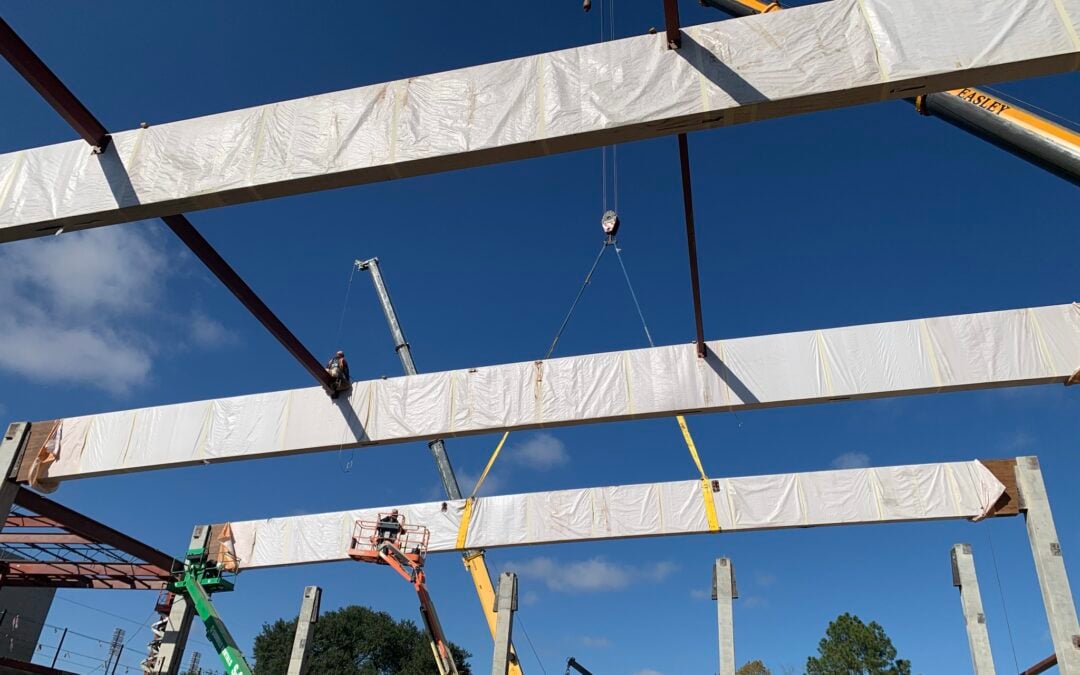
Construction creates the greatest moisture risk. Teams often install panels before completing the enclosure. This leaves timber exposed to rain and snow. Even short exposure can raise moisture levels, especially at edges and connections.
Storage also matters. Placing timber on wet ground, wrapping it too tightly, or blocking airflow can trap moisture and slow drying.
Common construction risks include:
- Rain and snow during installation
- Limited temporary protection
- Moisture trapped under wraps
- Poor airflow around materials
After Occupancy: Operational Moisture Loads
After occupancy, moisture risks change. Roof leaks, window failures, façade issues, and plumbing leaks can introduce water into timber assemblies.
Even small leaks can create hidden moisture buildup. Condensation is another major concern. Poor humidity control, weak insulation, or thermal bridges allow moist air to condense on cool timber surfaces. Over time, this increases mold risk.
From Below and Within: Hidden Moisture Pathways
Not all moisture enters as liquid water. Air movement and vapor diffusion also carry moisture into building assemblies. Moisture can rise from slabs and foundations when vapor barriers are incomplete. Air leaks can transport humid air into cooler areas, where it condenses inside timber elements. Without clear drying paths, trapped moisture creates long-term performance problems.
Designing Buildings That Manage Moisture Effectively
Effective moisture control starts early. It must match climate conditions and involve close coordination between design and construction teams. Decisions made during planning influence how well the building resists water and manages humidity over time. Early integration reduces costly changes and improves long-term performance. A proactive approach helps protect both structural integrity and indoor comfort.
Site Planning and Exposure Control
Site conditions set the baseline risk. Proper grading and drainage move water away from foundations. Building orientation can reduce exposure to wind-driven rain. These steps lower moisture stress before enclosure systems are installed.
The Building Enclosure as the First Line of Defense
The enclosure protects mass timber by managing water and allowing drying. Strong designs focus on drainage rather than relying on perfect seals.
Key strategies include:
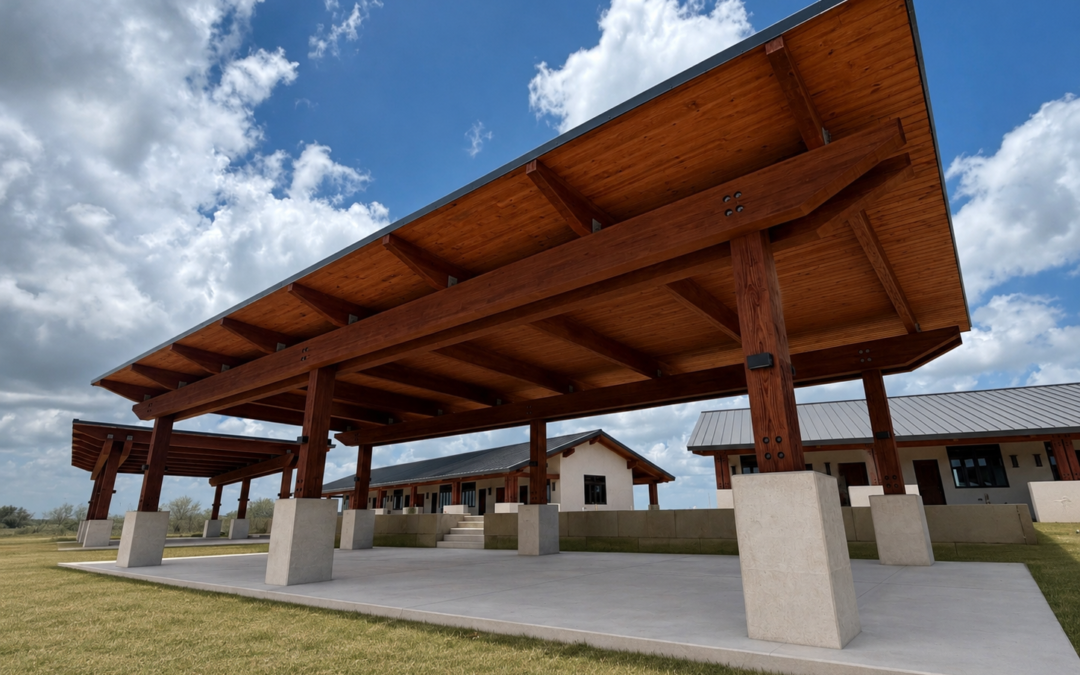
- Roof overhangs and sloped surfaces
- Continuous drainage layers
- Pressure-equalized façades
- Redundant water barriers
These strategies work together to protect structural components and maintain long-term durability. When properly implemented, they significantly reduce the risk of moisture-related damage.
Continuity at Transitions and Interfaces
Many failures happen at transitions. Roof-to-wall joints, windows, and penetrations are common weak points. Design teams must maintain continuous air, water, and vapor control layers. Even small gaps can bypass protection systems and trap moisture. Clear detailing and coordination reduce this risk.
Material Choices and Protective Measures
Material selection affects moisture resistance. Factory-controlled moisture content improves consistency. Temporary coatings reduce absorption and staining during construction.
Air and vapor control layers must match climate conditions. Continuous air barriers limit moisture movement. Vapor retarders reduce diffusion and condensation. Together, these elements form a coordinated moisture-control system.
Construction Practices That Support Moisture Control
When we build, we make sure good design continues on site. We use temporary protection like tenting and breathable wraps to shield your home from the weather. We also use careful flashing, sealing, and construction tolerances to keep water out and let materials move naturally. Our team inspects every detail to make sure it works as intended. We run HVAC systems early to control humidity and keep your home comfortable from day one.
Monitoring and Managing Moisture Over Time
Managing moisture doesn’t stop once you move in. We use continuous monitoring with embedded sensors to track moisture in real time. This allows us to respond quickly if anything changes. We also inspect roofs, façades, sealants, and drainage systems regularly. Staying proactive helps protect timber and extend the life of your home’s enclosure.
Building Durable Mass Timber Structures Through Moisture Control
Managing moisture in mass timber buildings requires a coordinated, system-based approach. Gaps in design, detailing, construction, or maintenance can affect durability, air quality, and performance.
As a mass timber construction specialist, Binkley Construction supports moisture management from early design through long-term operation. By coordinating enclosure design, material selection, construction practices, and monitoring systems, the team helps deliver durable, high-performance buildings.
Planning a mass timber project? Contact us to ensure your building uses proven moisture management strategies that support resilient performance for decades.