Modern architecture is no longer limited to straight lines and rigid forms. Designers today look for materials that allow creative freedom without sacrificing structural performance. Glulam beams have emerged as a leading solution because they combine strength, adaptability, and sustainability in one engineered wood product. Research shows that engineered wood products like glulam can be manufactured from small-diameter timber and lower-grade lumber, allowing longer structural members while improving overall material efficiency and reducing waste.
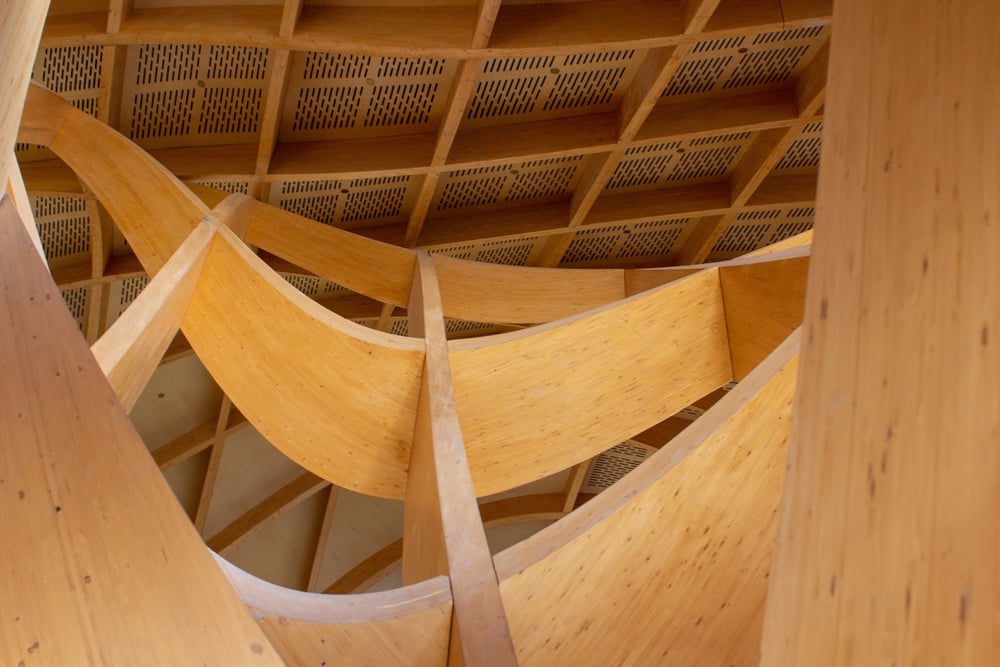
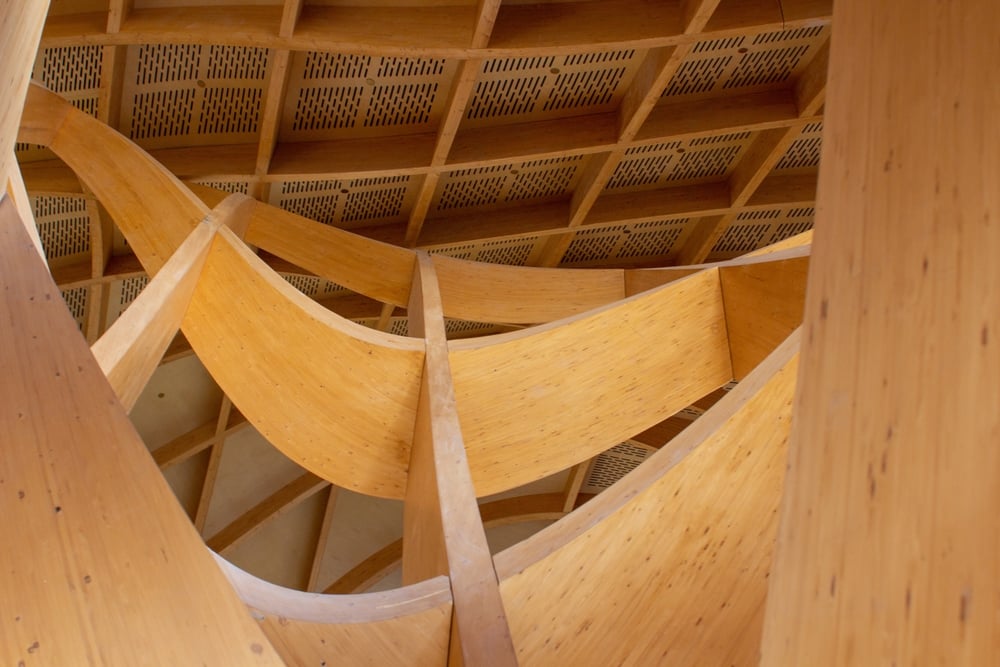
Curved glulam beams are used to achieve distinct structural forms and efficient long-span building systems in modern mass timber construction. From sweeping rooflines to curved structural systems, these beams are used to achieve long-span geometry and efficient load distribution in mass timber construction. Their ability to be formed from smaller timber sections while delivering high strength makes them both a design and sustainability advantage in modern construction.
At the same time, glulam maintains excellent load-bearing capacity, making it suitable for both decorative and structural applications. Engineers benefit from its predictable performance, while architects gain the freedom to create complex geometries that would be difficult with traditional materials. This balance between beauty, efficiency, and structural reliability is what makes custom glulam curvature a preferred choice in contemporary construction.
Key Takeaways
- Curved glulam beams offer strength, flexibility, and sustainability in modern architecture
- Glulam allows architects to create complex curves and long-span structures with precision
- Layered timber construction improves stability and reduces risks like warping or cracking
- Glulam supports sustainable construction by using renewable timber and reducing material waste
- Curved glulam beams are widely used in roofs, bridges, commercial spaces, and landmark structures
Why Curved Glulam Beams Stand Out
Curved glulam beams offer more than just aesthetic appeal. They provide a combination of structural strength, adaptability, and efficiency that supports modern architectural demands. As projects become more complex, these beams allow designers to explore bold forms without compromising on safety or performance.
Architects and engineers rely on curved glulam to achieve designs that would be difficult or impractical with traditional materials. The controlled manufacturing process makes it possible to create precise curves and consistent shapes. This level of accuracy ensures that both visual intent and structural requirements are met from concept to completion.
Another key advantage lies in the balance between sustainability and performance. Glulam uses timber resources efficiently while delivering high load-bearing capacity and long-term durability. This makes it a reliable choice for projects that aim to meet environmental goals while maintaining structural excellence.
Key Benefits
- Design flexibility: Glulam can be manufactured in a wide range of curves, radii, and profiles to match specific design visions. This allows for more expressive and customized architectural forms that stand out in both interior and exterior applications. It also gives architects the freedom to experiment with organic shapes and fluid geometries that are difficult to achieve with conventional materials.
- High strength and stability: The layered construction improves load distribution and enhances the overall strength of the beam. This reduces the risk of warping, splitting, or cracking that is often associated with solid timber. As a result, glulam maintains its structural integrity over time even under varying environmental conditions.
- Efficient for long spans: These beams are ideal for roofs, auditoriums, and large open spaces where minimal support is required. Their strength allows for longer spans without compromising safety or performance. This helps create open, unobstructed interiors that are both functional and visually appealing.
- Sustainability: Glulam is made from renewable timber resources, making it an environmentally responsible building material. It also makes efficient use of smaller wood sections, reducing overall material waste. In addition, its production process typically requires less energy compared to steel or concrete alternatives.
- Precision manufacturing: Factory-controlled processes ensure consistent quality and accurate shaping of each beam. This level of precision reduces errors during installation and improves overall construction efficiency. It also allows for better integration with other building components, ensuring a smoother construction process.
Curved glulam beams provide predictable structural performance while enabling efficient fabrication and installation in complex timber construction systems. They allow architects and engineers to achieve precise geometries without compromising strength or stability. This makes them ideal for long-span roofs, arches, and modern mass timber projects. Their adaptability also supports faster on-site assembly and reduced material waste.
Common Types of Glulam Curves
Different architectural goals require different curvature styles. Custom fabrication allows designers to choose the exact form that aligns with both structural and visual requirements. This level of customization helps ensure that each curved element performs efficiently while enhancing the overall design intent of the structure.
| Curve Type | Description | Common Applications |
| Single Curvature | Bends in one direction with a constant radius | Roof beams, canopies |
| Double Curvature | Complex bending in multiple directions | Sculptural structures, facades |
| Tapered Curves | Varying depth along the beam length | Bridges, large-span roofs |
| Arched Beams | Symmetrical curves forming arches | Halls, churches, entrances |
| Freeform Shapes | Custom, non-uniform curves | Landmark and signature projects |
Each of these curve types serves a distinct purpose in architectural design, allowing professionals to match form with function more effectively. The choice of curvature depends on factors such as load requirements, span length, and the desired visual impact. By selecting the appropriate type, designers can create structures that are not only visually striking but also structurally efficient and practical for long-term use.
Fabrication Process and Technical Considerations
Creating curved glulam beams involves advanced engineering and careful craftsmanship. Thin layers of timber are bonded together under controlled pressure to achieve the desired shape. This lamination process allows for precise curvature while maintaining structural integrity. Each beam is designed based on load requirements, span length, and environmental conditions.
One of the main challenges is predicting how curved beams will handle stress and load distribution. Engineers must account for factors such as bending forces, moisture content, and long-term performance. Modern design software and testing methods help address these challenges, ensuring that each beam performs reliably in real-world conditions.
Close collaboration between architects, engineers, and fabricators is essential. Early coordination helps align design intent with manufacturing feasibility, reducing costly revisions later. This integrated approach leads to efficient production and high-quality outcomes that meet both aesthetic and structural goals.
Sustainability and Environmental Benefits
Glulam beams are an efficient structural material designed to maximize the use of harvested timber. By bonding smaller wood sections into engineered members, the process reduces raw material waste while improving yield from each log. Many suppliers also source timber from certified forest management programs, supporting responsible resource use across the supply chain.
Compared to steel and concrete systems, glulam production generally requires lower embodied energy and supports carbon storage within the structural frame. This makes it a practical material choice in projects where material efficiency and lifecycle performance are key design considerations.
Applications in Modern Architecture
Curved glulam beams are used across a wide range of projects. Their adaptability allows them to fit both functional and artistic roles in construction. This makes them suitable for everything from large-scale infrastructure to detailed architectural features where both performance and appearance matter. Their use is especially prominent in designs that prioritize open spaces, natural materials, and expressive structural forms. Architects often select curved glulam when they want to combine engineering efficiency with a warm, natural aesthetic that enhances the user experience.
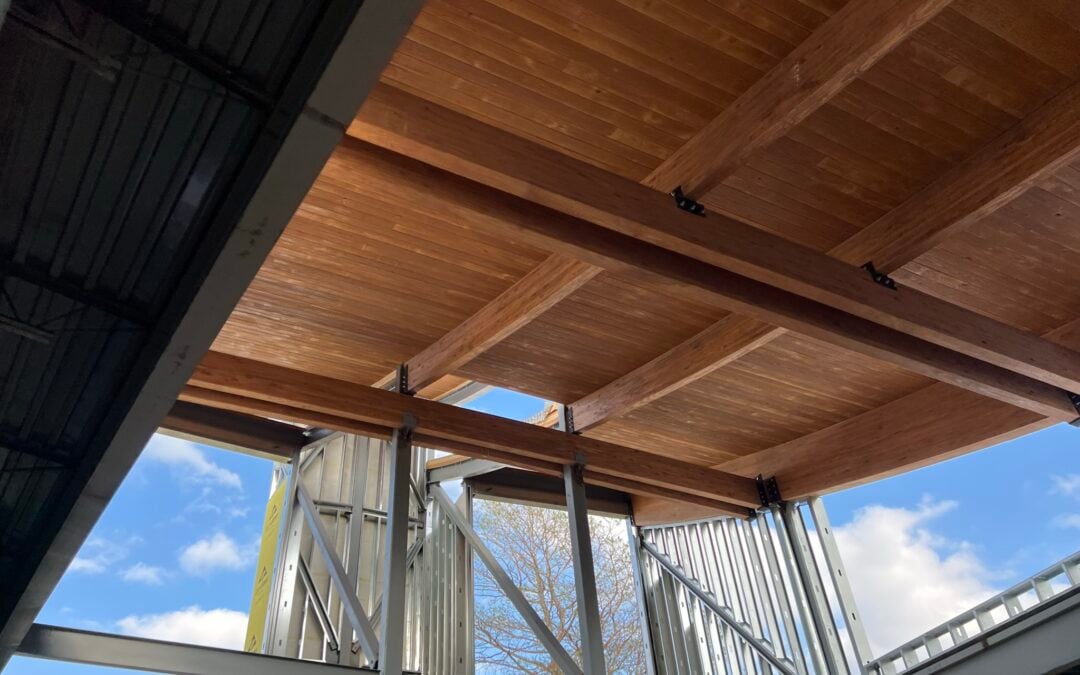
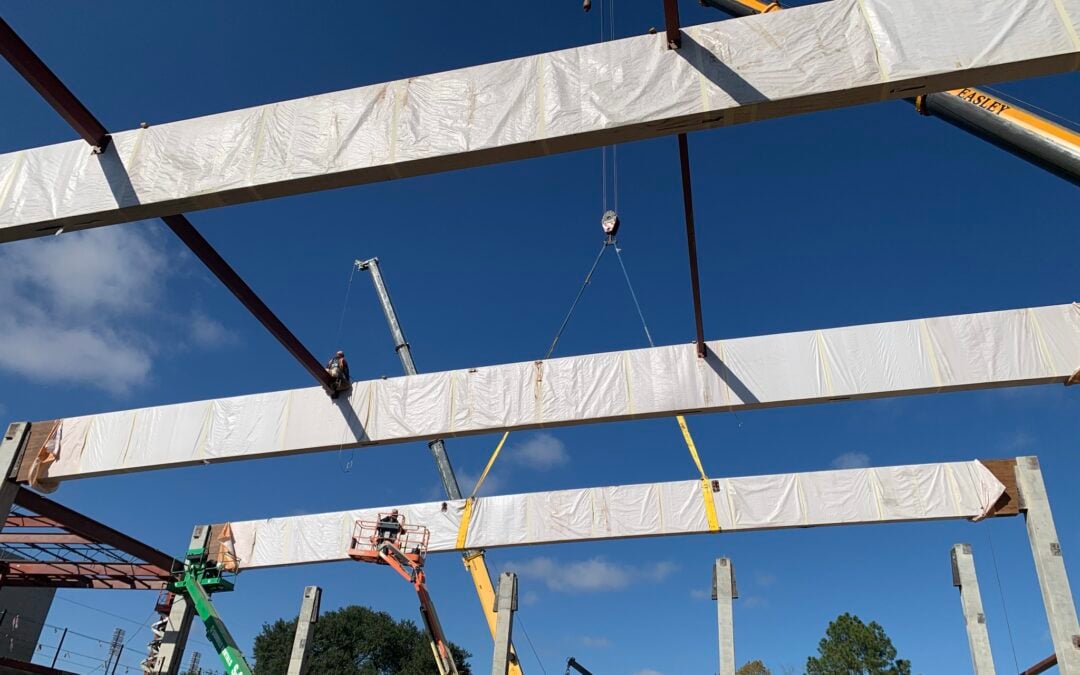
For example, in the Immanuel Lutheran Church project, Binkley Construction installed engineered glulam systems as part of a large-span mass timber structure. The project included the installation of structural glulam framing and exposed timber decking within a coordinated erection sequence, resulting in open interior volumes and expressive roof geometry while maintaining structural precision and buildability.
- Large-span roofs in stadiums and auditoriums
- Bridges with aesthetic and structural requirements
- Commercial buildings with distinctive interiors
- Residential projects featuring exposed timber elements
- Cultural and public spaces designed as architectural landmarks
These applications highlight how curved glulam beams bridge the gap between engineering and architecture. They are not limited to structural support; they also contribute to the overall identity and character of a building. As modern design continues to evolve toward more sustainable and expressive forms, glulam remains a key material in shaping innovative architectural environments.
Advancing Architectural Design with Custom Glulam Solutions
Custom glulam systems enable complex structural forms while maintaining strength, efficiency, and long-term durability. In modern mass timber construction, these systems are not only designed for visual expression but are also engineered for precise installation, structural performance, and construction feasibility.
As a mass timber construction specialist, Binkley Construction supports custom glulam projects through coordinated planning, structural coordination, and on-site installation. The team works closely with engineers, fabricators, and project stakeholders to ensure that each timber element is accurately placed, properly connected, and executed according to design and structural requirements.
Planning a project with custom glulam systems? Contact us to explore construction-driven solutions that deliver precise installation, structural reliability, and efficient execution of complex mass timber structures.