Heavy timber buildings are becoming increasingly common in commercial, institutional, and industrial construction. Designers and building owners often choose timber because it offers structural strength, natural visual appeal, and environmental advantages. Beyond the material itself, however, the long-term success of a timber structure depends on how the system is detailed and assembled. Well-planned detailing ensures that each structural component performs as intended and integrates properly with the rest of the building.
Timber construction details determine how the structural frame carries loads, manages moisture exposure, satisfies fire code requirements, and supports large open spans. These technical elements affect both the building’s safety and durability. When architects, engineers, and contractors carefully coordinate these details, the timber system can perform reliably for decades while maintaining its structural integrity and aesthetic character.
Binkley Construction brings more than 60 years of experience in timber-frame and mass-timber construction. Our team understands how precise installation, accurate joinery, and proper structural alignment affect both performance and appearance. Each beam, post, and connection must be positioned carefully to ensure the frame functions as a stable, efficient structural system.
Key Takeaways
- Timber construction details directly influence structural strength, durability, moisture resistance, and long-term building performance
- Timber frame systems rely on large posts and beams that transfer loads efficiently throughout the structure
- Mass timber products provide additional stability, allow longer spans, and support modern building requirements
- Strong connections, such as mortise and tenon joints, maintain structural integrity while preserving visual appeal
- Proper detailing for moisture, fire protection, energy efficiency, and acoustics supports overall building performance
Timber Frame Construction: Structural Strength and Design
Timber frame construction uses large posts and beams to form a building’s primary structural framework. Unlike light-frame construction, where many smaller members distribute loads, timber-frame systems rely on fewer, larger structural elements. These components carry significant loads across floors, walls, and roof systems while maintaining open interior spaces.
In a timber frame structure, beams securely connect to vertical posts, creating a stable structural skeleton. The layout of these members determines how roof loads, floor loads, and lateral forces are safely transmitted through the frame to the foundation. Proper design ensures that each element supports the others and prevents structural movement over time.
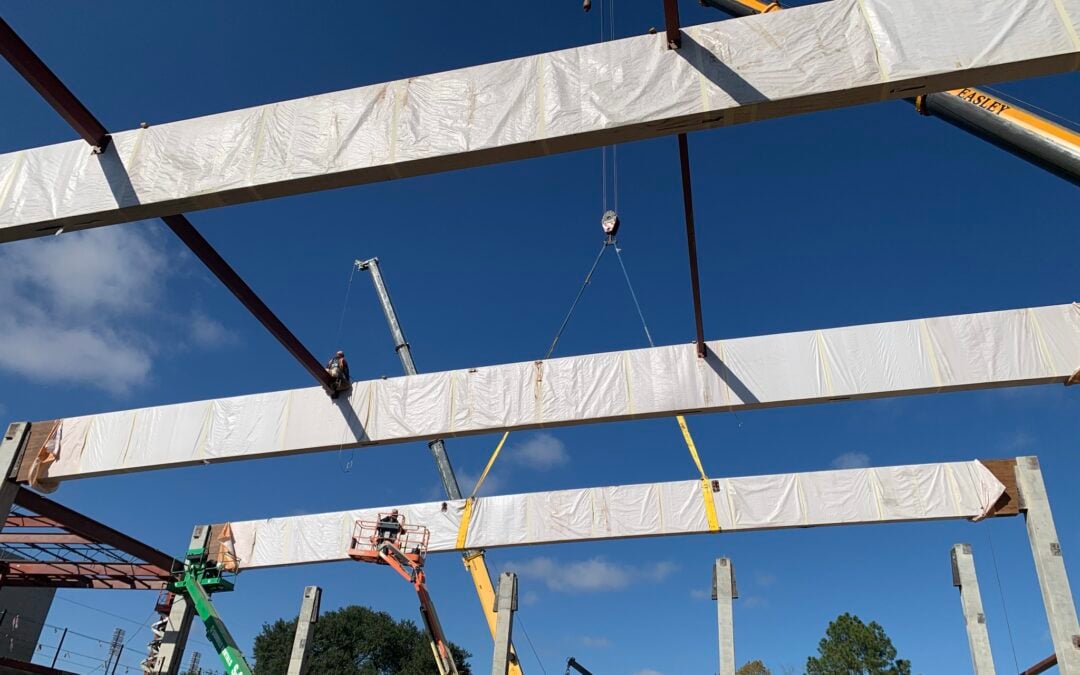
Binkley Construction has completed more than 100 timber and heavy timber projects, including schools, municipal buildings, commercial facilities, and religious structures. Our team coordinates timber selection, framing methods, and jobsite safety procedures to ensure that each project meets structural requirements and installation standards.
Mass Timber Systems for Modern Frame Construction
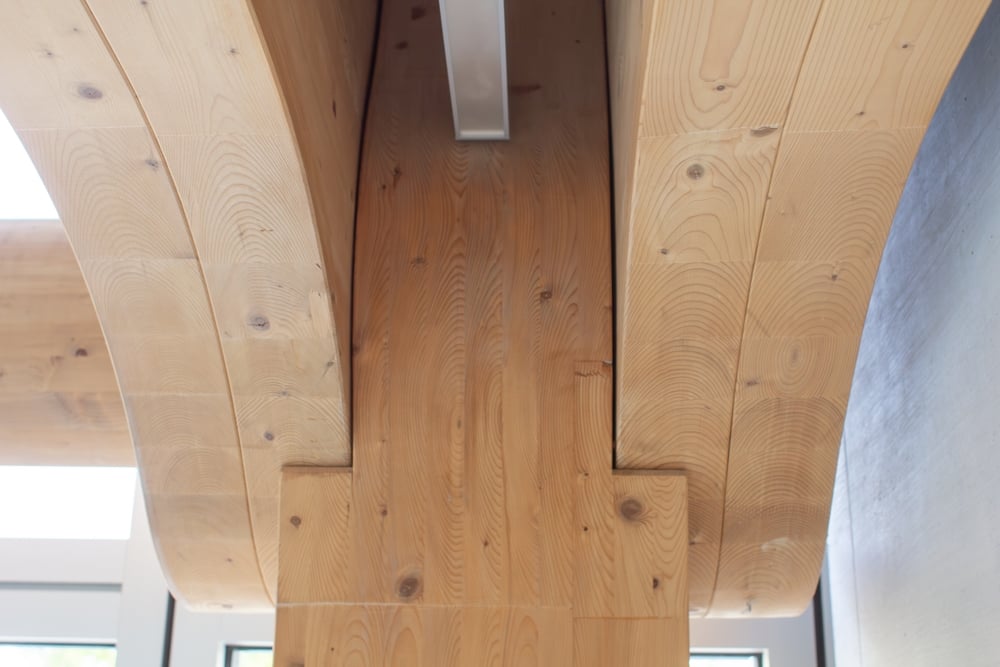
Mass timber refers to engineered wood products developed to meet the structural demands of larger commercial buildings. These materials are manufactured by layering and bonding wood components together, creating panels and beams with high structural capacity and predictable performance. As construction technology evolves, mass timber systems have become a practical option for projects that require both structural strength and sustainable materials.
Mass timber is typically sourced from responsibly managed forests and stores carbon throughout a building’s lifespan. This characteristic makes it a more environmentally responsible structural material compared to many traditional options. In addition to their sustainability benefits, engineered timber products deliver consistent performance, enabling architects and engineers to design larger, more complex structures.
Common mass timber products include:
- Glue-laminated beams
- Laminated decking
- Cross-laminated timber (CLT) panels
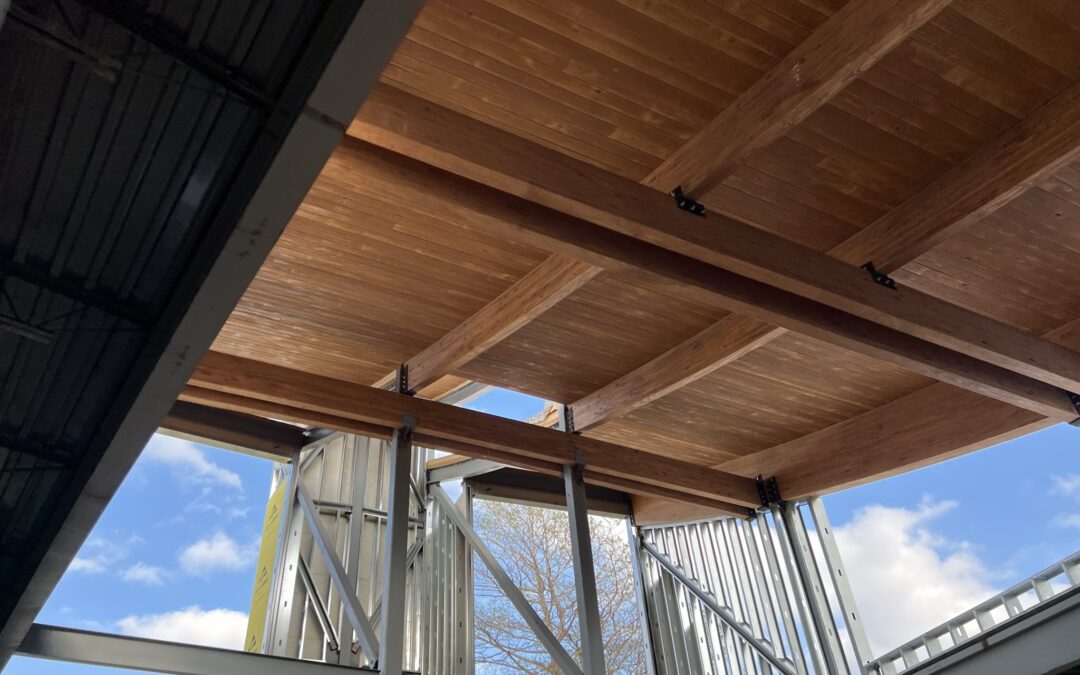
Mass timber panels can function as floors, roofs, or shear walls in modern construction. When integrated with a timber frame structure, these panels increase stiffness and help distribute loads more evenly throughout the building.
How Mass Timber Improves Frame Performance
When mass timber components are combined with traditional timber framing, they strengthen the overall structural system and support larger spans. Engineered panels and beams deliver consistent structural performance, enabling buildings to remain stable across large floor areas. This integration also reduces structural movement and helps maintain alignment between framing members over time.
| Feature | Performance Benefit |
| Large panel sizes | Faster installation on-site |
| Engineered layers | Higher strength and load capacity |
| Dimensional stability | Reduced shrinkage and warping |
| Predictable fire behavior | Easier compliance with building codes |
Timber Frame Connections and Mortise and Tenon Joints
Connections are one of the most important elements in timber frame construction. Even strong beams and posts cannot perform effectively if the joints connecting them are poorly designed or installed. Well-crafted connections transfer loads between members and keep the entire frame stable under changing structural forces.
Mortise-and-tenon joints are a traditional joinery method used in timber framing. The mortise is a cavity cut into a beam or post, while the tenon is a shaped projection that fits securely into the opening. When fitted correctly, the two components form a tight mechanical connection that locks the members together and distributes loads evenly through the frame.
Benefits of mortise and tenon joints include:
- Creates tight mechanical connections
- Reduces reliance on exposed hardware
- Maintains visual appeal in exposed timber frames
In modern timber construction, these traditional joints may also incorporate concealed steel plates or fasteners to enhance structural integrity. This approach allows builders to maintain the classic appearance of exposed timber framing while meeting modern engineering requirements.
Post and Beam Frame Systems for Open Layouts
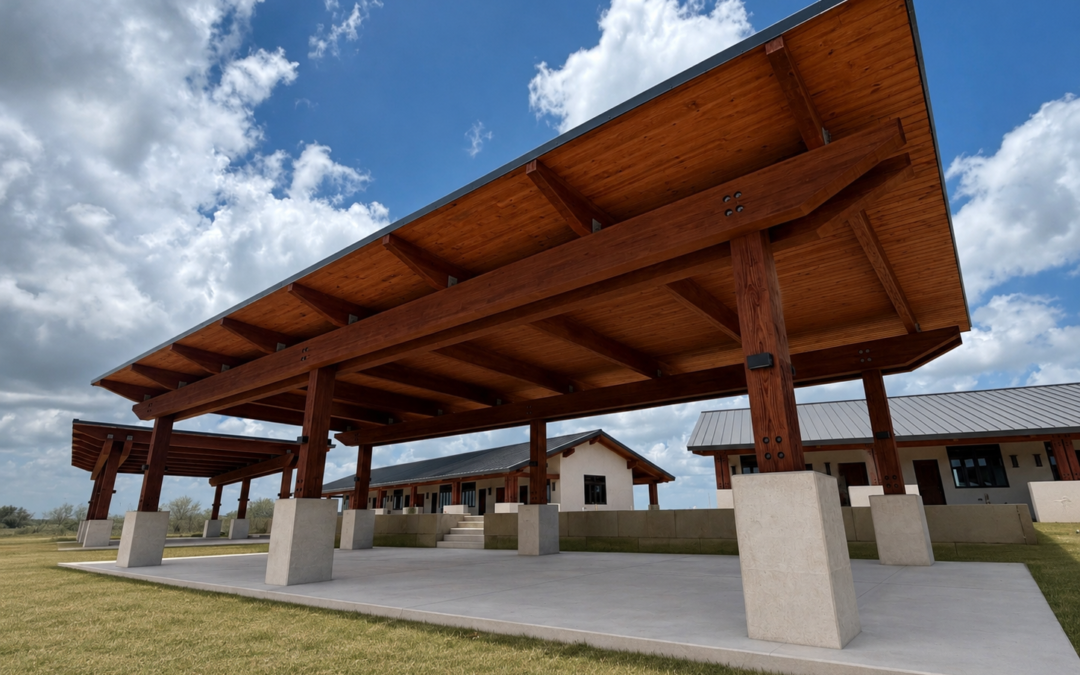
Post-and-beam construction is one of the most widely used structural systems in commercial timber projects. In this design, vertical posts support horizontal beams that form a clear structural grid throughout the building. This layout allows large interior areas to remain open while maintaining structural stability.
Because structural members are spaced farther apart, post-and-beam systems offer greater flexibility in interior design. Architects can create wide open rooms without relying on multiple load-bearing walls, making the system ideal for schools, offices, community centers, and religious buildings.
Advantages of post and beam frame systems include:
- Large open interior spaces without many load-bearing walls
- Flexible layouts for offices, classrooms, or worship spaces
- Exposed wood aesthetics enhance interior design
Proper alignment of each beam and post is essential to maintaining the frame’s structural balance. Accurate installation ensures that loads transfer correctly through the structure and prevents long-term movement or instability.
Moisture Protection in Timber Frame Construction
Moisture management is one of the most important factors affecting the durability of timber structures. Although wood is a strong and reliable building material, prolonged exposure to moisture can lead to decay, warping, or structural deterioration. Effective moisture control strategies are therefore essential in timber frame construction.
Architects and contractors use several design strategies to protect timber components from water exposure. These measures help prevent moisture intrusion and allow any trapped water to drain or dry quickly.
Key moisture control measures include:
- Flashing at roof and wall transitions
- Drainage systems behind exterior cladding
- Elevated post bases above concrete slabs
- Proper roof slope and overhang design
- Sealed end-grain surfaces
Fire Performance in Heavy Timber and Mass Timber
Fire safety in timber buildings is often misunderstood. Many people assume wood structures burn quickly, but heavy timber behaves differently from smaller wood framing members. Large structural elements respond to fire in a more controlled and predictable manner.
When exposed to fire, heavy timber members form a protective char layer on the outside surface. This layer slows combustion and protects the beam or post’s structural core. As a result, the main structural components can retain their strength for longer during a fire.
| System Type | Fire Behavior |
| Light wood frame | Burns quickly |
| Heavy timber frame | Forms protective char |
| Mass timber panels | Predictable structural performance |
Energy and Acoustic Performance in Timber Frame Buildings
Modern timber frame buildings must meet strict energy-efficiency and acoustic-performance standards. Proper insulation systems, airtight construction methods, and carefully designed wall assemblies help maintain interior comfort and reduce energy consumption.
Mass timber floor systems can also include layered assemblies designed to reduce sound transmission between levels. These acoustic solutions are especially important in schools, offices, and multi-use commercial buildings where noise control affects occupant comfort and productivity.
Benefits of proper frame detailing include:
- Lower energy bills
- Improved indoor comfort
- Reduced sound transmission between floors
- Better long-term building performance
Why Timber Frame Construction Details Matter
Every structural component within a timber frame system contributes to the building’s overall performance. If structural connections are poorly designed or installation lacks precision, the building may experience movement, cracking, or moisture-related problems. Careful detailing prevents these issues and ensures that the structure performs as expected.
Precise planning also helps contractors install the timber frame efficiently while maintaining safety and accuracy during construction. Well-coordinated detailing improves installation speed, reduces jobsite complications, and increases long-term reliability.
Experienced timber contractors integrate mass-timber components with traditional timber framing techniques to ensure all elements work together as a unified structural system. This coordination supports both structural stability and architectural design goals.
Building Strong and Sustainable Heavy Timber Projects
Heavy timber construction combines structural strength, architectural beauty, and environmental responsibility in a single building system. When architects and builders understand how timber frames, engineered wood products, and structural connections interact, they can design buildings that remain strong and durable for generations.
Careful material selection, precise joinery, and accurate installation ensure that timber structures perform reliably under real-world conditions. With proper planning and construction practices, timber buildings provide long-term value while maintaining the natural warmth and character of exposed wood.
As heavy timber construction specialists, Binkley Construction guides projects from design through completion. The team installs glue-laminated beams, mass-timber panels, and timber-frame systems with precision and care. By coordinating structural materials, framing methods, and jobsite safety planning, Binkley Construction delivers buildings that are durable, safe, and visually striking.
Planning a heavy timber project? Contact us to ensure your building achieves long-term durability, sustainable performance, and timeless design.