Glulam, short for glued laminated timber, is one of the most widely used engineered wood products in modern construction. It is made by bonding multiple layers of dimensional lumber, creating a structural member that is stronger, more stable, and more consistent than solid sawn timber of the same size.
In mass timber buildings, glulam beams and columns form the main vertical and horizontal support system. They carry floor loads, support roofs, and connect directly with cross-laminated timber (CLT) panels and decking systems. Selecting the right glulam beam size is critical, as it affects load capacity, span length, deflection control, vibration, and overall structural performance.
This guide covers common glulam beam sizes, custom options, design considerations, and typical applications in residential and commercial construction.
Advantages of Glulam Beams in Modern Construction
Glulam beams strike a great balance between strength, sustainability, and design. They’re lighter than steel or concrete, making them easier to move and install, but still very strong. Their high strength-to-weight ratio lets you span longer distances with fewer supports, saving materials while keeping structures solid. Builders also like their predictable performance, which makes planning easier. The American Wood Council notes that glulam beams can span farther and handle more weight than regular lumber, making them reliable for many projects.
Glulam is also eco-friendly. It has a lower carbon footprint than steel or concrete, and it reduces thermal bridging, which helps with energy efficiency. Prefabricated manufacturing also cuts waste and ensures consistent quality.
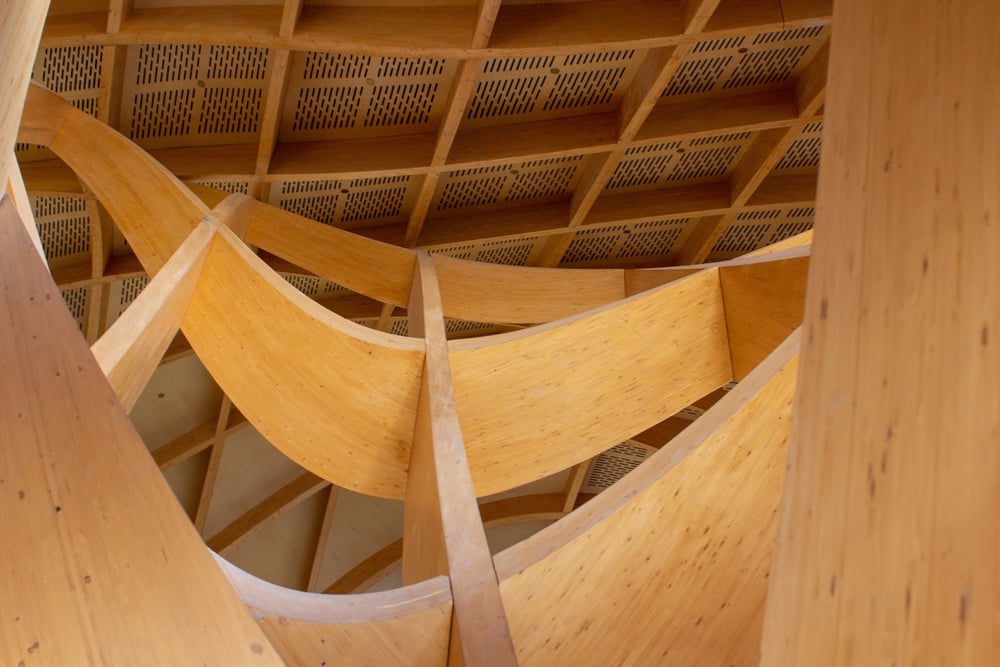
These beams are durable and stable, resisting warping and shrinkage. They look great when left exposed and can be made into custom shapes like curves or tapers, giving designers freedom without losing strength. This makes glulam perfect for everything from roofs and canopies to large public spaces.
Cost, Availability, and Lead Time
Glulam beam pricing varies based on size, wood species, grade, and level of customization.
Typical Cost Ranges
- Standard beams: $4–$10 per linear foot
- Premium or high-grade beams: $8–$12 per foot
- Custom or curved beams: $15–$30 per linear foot, depending on complexity
Lead Time Expectations
- Standard sizes: Usually available within 1–2 weeks
- Custom or oversized beams: May require 4–8 weeks or longer
Early coordination with your supplier helps avoid delays and ensures the right glulam beams are delivered on time.
Standard Glulam Beam Sizes
Glulam beams are available in a wide range of sizes to meet structural and design needs.
Standard Widths
Common widths include:
- 3.5 inches
- 5.5 inches
- 6.75 inches
- 8.75 inches
- 10.75 inches
Narrower beams are used in residential projects, while wider beams suit commercial and heavy-load structures.
Standard Depths
Beam depth affects span capability and stiffness. Standard depths range from 9.25 inches to over 36 inches. Deeper beams reduce deflection and vibration in floors and roofs.
Standard Lengths
Most suppliers can provide glulam beams up to 60 feet. Longer members are possible with special fabrication and transport planning. Extended lengths allow open interior spaces with fewer columns.
Custom and Architectural Glulam Members
Custom and architectural glulam members allow designers to meet both structural demands and visual goals. Unlike many traditional materials, glulam can be manufactured in a wide range of shapes and sizes without sacrificing strength or performance. This flexibility makes it ideal for projects where the structure is meant to be seen, not hidden.
Glulam can be engineered to support complex loads while also enhancing the overall design of a space. Common custom options include:
- Curved beams, often used in roof structures or expressive interiors to create smooth, flowing lines
- Tapered beams, which reduce material use while improving visual balance and efficiency
- Arched members, suitable for large halls, auditoriums, and public spaces that require wide, open spans
- Cantilevered beams, commonly used for overhangs, canopies, and modern architectural features
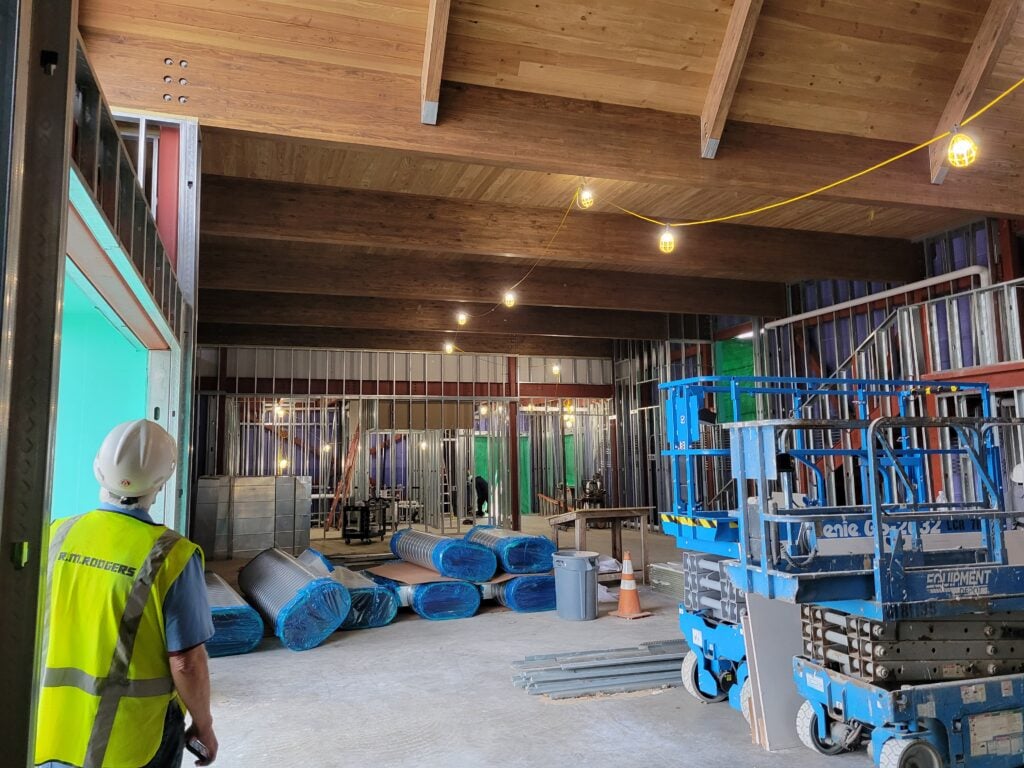
These custom members are frequently used in schools, churches, sports facilities, and commercial interiors, where exposed structural elements add warmth and character. By combining strength, durability, and visual appeal, architectural glulam members help create spaces that are both functional and visually distinctive.
Common Glulam Beam Sizes and Applications
Selecting the correct glulam beam size is essential for structural safety, construction efficiency, and cost management. Different sizes are designed to handle varying loads, spans, and project types, allowing builders and designers to match performance requirements with budget and design goals.
| Glulam Size | Typical Applications |
| 3.5″ × 9.25″ or 3.5″ × 11.25″ | Residential floors, small roof spans, porch framing, light loads |
| 5.5″ × 12″ to 5.5″ × 18″ | Mid-size commercial projects, mezzanines, moderate spans |
| 6.75″ × 24″ and larger | Long-span retail spaces, community centers, and industrial buildings |
| 8″, 10″, 12″ columns | Mass timber structures supporting floors, beams, and roofs |
Choosing the right size ensures that glulam members provide adequate load-carrying capacity while avoiding over-engineering, which can increase material costs. Understanding these standard dimensions also helps streamline fabrication and lead times, particularly when ordering prefabricated beams.
By matching glulam sizes to project requirements, architects and engineers can achieve structural reliability, aesthetic appeal, and efficient material use, making glulam a versatile choice for projects of all scales.
How Glulam Works with Other Mass Timber Components
Glulam beams are a versatile component of mass timber construction. They can be combined with other mass timber elements to create structural systems that are strong, durable, and efficient. These systems also improve fire resistance and acoustic performance. At the same time, they enhance the visual appeal and sustainability of buildings.
Glulam and Cross-Laminated Timber Panels
Glulam beams are frequently paired with CLT panels, which are used for floors, walls, and roofs. Beams support these panels and transfer loads to columns and foundations. This system is efficient, sustainable, and widely used in mid-rise and commercial construction.
Glulam and Mass Timber Decking
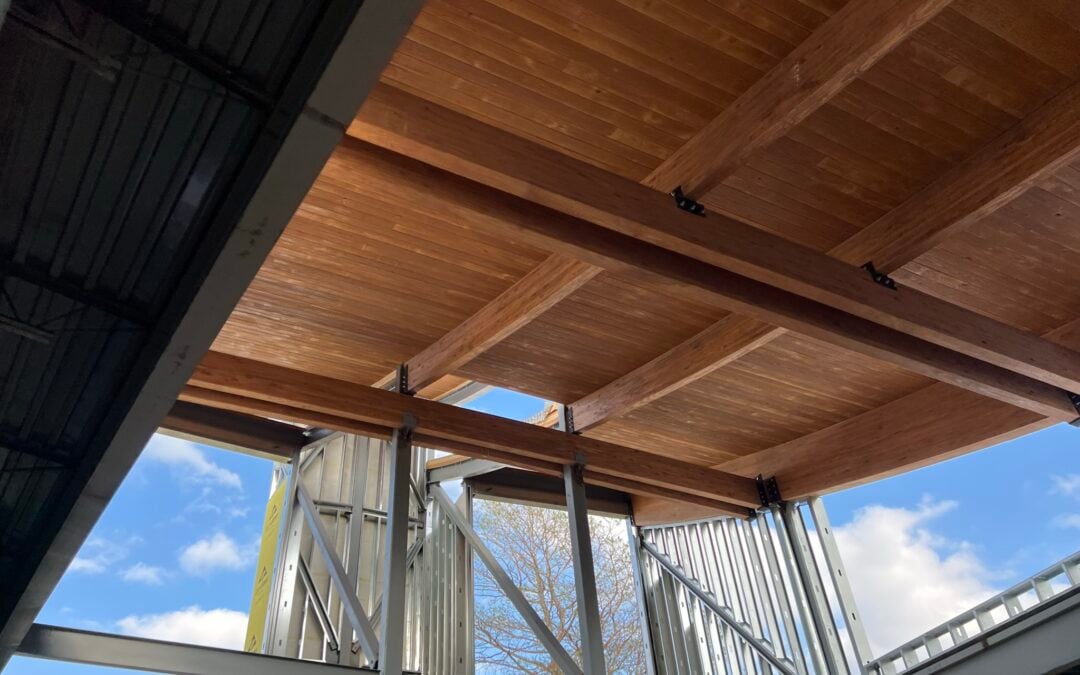
Glulam works well with mass timber decking, such as tongue-and-groove panels. This combination provides structural stability and visual warmth, especially in exposed ceilings.
Hybrid Timber-Steel Systems
Glulam can be combined with steel plates, connectors, and screws. This hybrid approach combines wood’s sustainability with steel’s strength, allowing flexible architectural designs while meeting structural requirements.
Factors That Determine Glulam Beam Size
Choosing the right glulam beam size ensures structural safety, performance, and design efficiency. Span length, loads, building codes, aesthetics, and environmental conditions all influence sizing. Proper selection also helps control costs and simplify construction.
- Span Length: Longer spans need larger or higher-grade beams to control deflection.
- Live and Dead Loads: Beams support occupancy loads and the weight of floors, roofs, and walls.
- Building Codes: Local codes dictate minimum safety and performance standards.
- Deflection and Vibration: Proper sizing prevents excessive movement that can affect comfort and finishes.
- Environmental Conditions: Moisture and temperature changes can influence design considerations.
- Aesthetic Considerations: Exposed beams may be sized or shaped for visual impact.
- Budget and Availability: Standard sizes are more affordable and easier to source than custom members.
Choosing the Best Glulam Beam for Your Project
Selecting the right glulam beam size is essential for structural performance, cost efficiency, and timely project completion. Early planning and collaboration with experienced suppliers ensure accurate sizing, smooth delivery, and hassle-free installation.
As a mass timber subcontractor, we provide expert guidance on glulam beam selection, procurement, and project planning. Our team helps you choose the right members, stay compliant with codes, and keep your construction schedule on track.
Seeking reliable support with glulam beams for your upcoming project? Contact us today to discuss your requirements and secure the perfect solution.