Mass timber construction often relies on more than one engineered wood product to create a complete structural system. Two of the most common are cross-laminated timber (CLT) and glue-laminated timber (glulam). While both are engineered wood products, they serve different purposes within a building.
CLT is commonly used to create large structural panels for floors, walls, and roofs, while glulam is typically used for beams, columns, and other structural elements that form the building’s primary framework. When used together, these materials can create strong, efficient, and visually appealing mass timber structures. For project teams, understanding how CLT and glulam work together is important for coordinating fabrication, delivery, lifting, and installation. Proper coordination helps ensure that each component is installed in the right location and sequence.
Key Takeaways
- CLT is commonly used for floors, walls, and roof panels
- Glulam is commonly used for beams, columns, and structural frames
- CLT and glulam can work together as complementary building components
- Proper sequencing and coordination are essential for efficient mass timber installation
- Experienced crews help ensure prefabricated components are placed accurately
What Is CLT?
Cross-laminated timber (CLT) is an engineered wood product made by stacking layers of lumber perpendicular to one another and bonding them together. The CLT construction process creates large, rigid structural panels that can be manufactured to project-specific dimensions. CLT panels are commonly used for:
- Floors
- Walls
- Roofs
- Structural diaphragms
- Other large panel applications
Because CLT panels are prefabricated, openings for doors, windows, stairs, and building systems can be incorporated into the panels before they reach the job site. This makes accurate fabrication and installation particularly important. During installation, each panel must be positioned and aligned according to the project plans. Proper placement helps ensure that connections, openings, and adjacent components line up as intended.
What Is Glulam?
Glue-laminated timber, or glulam, is an engineered wood product made by bonding layers of lumber together with the grain generally running in the same direction. This creates strong structural members that can be manufactured in a variety of sizes and configurations. Glulam is commonly used for:
- Beams
- Columns
- Arches
- Long-span structural elements
- Exposed architectural features
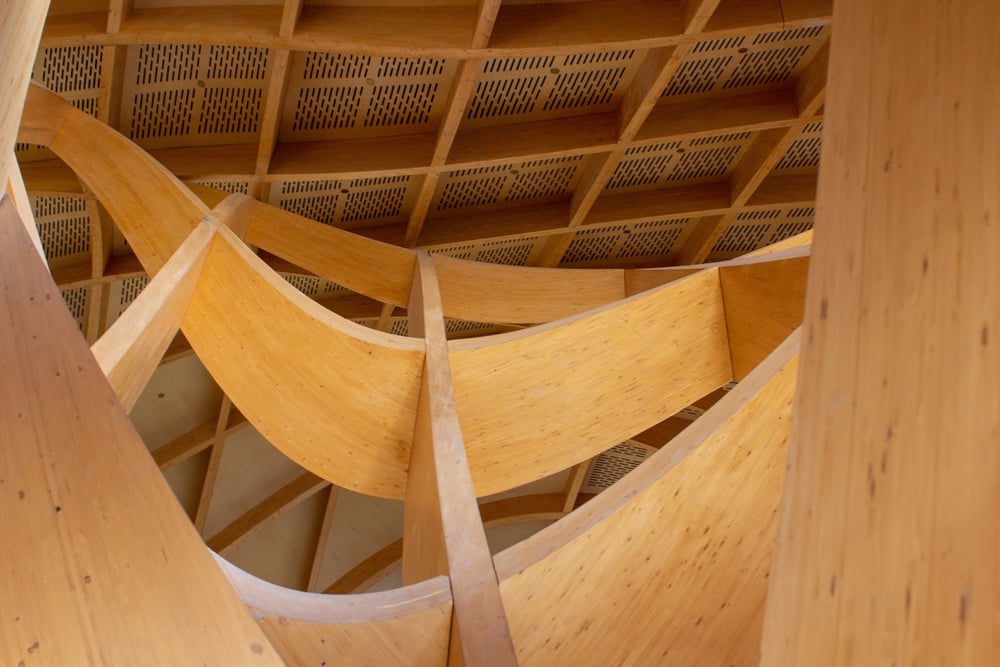
Glulam can provide both structural support and architectural character. Its ability to accommodate different shapes and spans makes it useful for projects that require large open spaces or distinctive timber elements. Unlike CLT, which is primarily manufactured as large panels, glulam is generally used as linear structural members. This difference allows the two materials to serve complementary functions within the same building.
CLT vs. Glulam: What’s the Difference?
While CLT and glulam are both engineered wood products, their construction and typical applications are different. CLT is manufactured as large structural panels, while glulam is formed by bonding layers of lumber to create strong beams and columns. The adhesives used in both materials help create durable, engineered components designed to perform under structural loads. This comparison of glulam and CLT adhesives also highlights how adhesive systems contribute to the strength and performance of these mass timber products.
| Feature | CLT | Glulam |
| Form | Large structural panels | Beams, columns, and other structural members |
| Layer orientation | Alternating perpendicular layers | Layers generally run parallel |
| Common applications | Floors, walls, roofs | Beams, columns, arches |
| Primary role | Panelized structural system | Structural framing |
| Installation | Large panels are lifted and positioned | Members are lifted and connected into the frame |
| Architectural use | Exposed floors, walls, and ceilings | Exposed beams, columns, and curved elements |
The two products aren’t necessarily alternatives. In many mass timber buildings, CLT and glulam are used together. Each material is typically selected for the structural role it is best suited to perform.
How CLT and Glulam Work Together
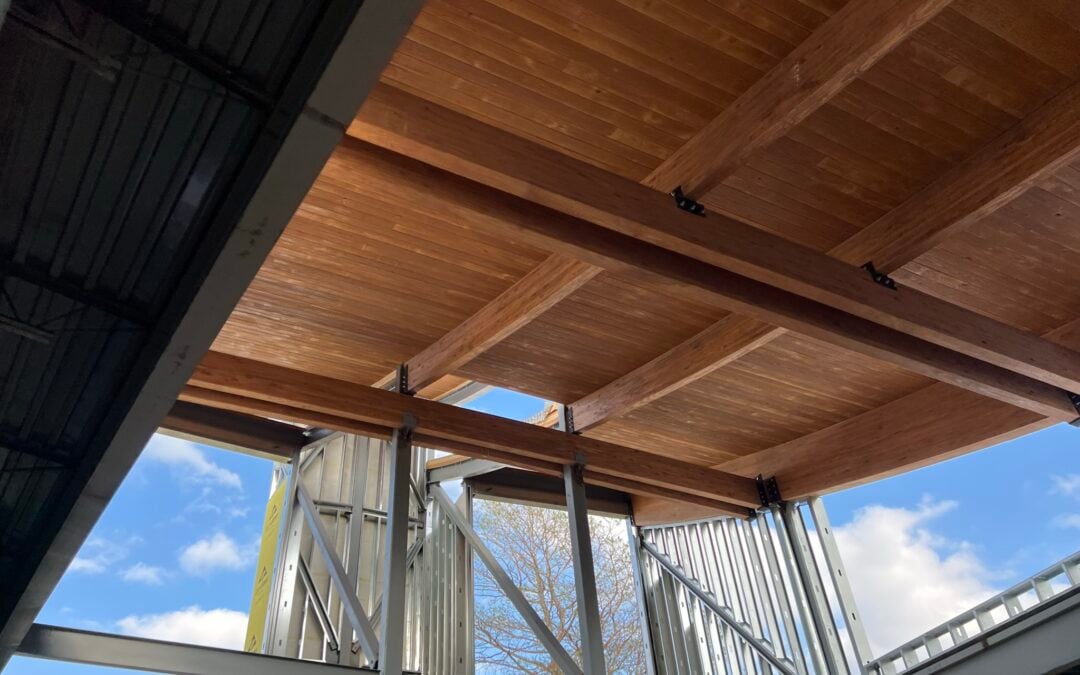
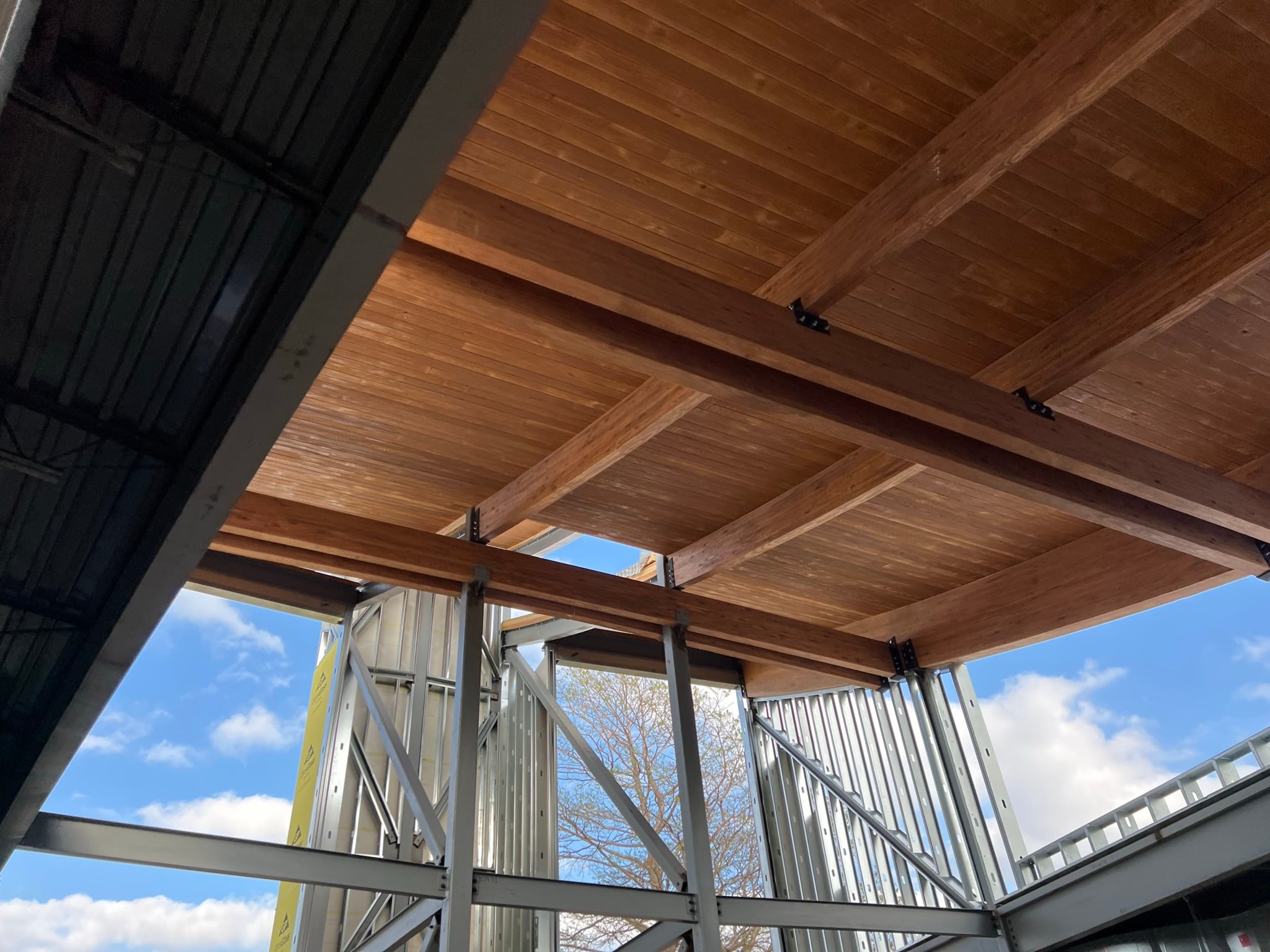
A mass timber building may use glulam to create its primary structural frame while CLT panels form the floors, roofs, or walls within that frame. For example, glulam columns can support large beams that span across an open area. CLT floor panels can then be installed on top of or between those structural members to create the building’s floor system.
The same principle can apply to roof systems. Glulam beams can provide the primary support while CLT panels create the structural roof surface. This combination allows project teams to take advantage of the different characteristics of each material while creating an integrated mass timber structure.
A Typical Combination May Include:
- Glulam columns supporting the building frame
- Glulam beams spanning between columns
- CLT panels forming floor systems
- CLT panels forming roof systems
- CLT or other timber panels forming walls
- Connections joining the different components into one structural system
The exact combination depends on the building’s design, structural requirements, span lengths, and architectural goals. The materials are selected to work together rather than compete with one another. This approach allows each component to contribute where its structural properties are most effective.
Why Installation Coordination Matters
Because CLT panels and glulam members are prefabricated, installation requires careful coordination. Components need to arrive at the right time, be staged appropriately, and be lifted and installed according to the planned sequence. For example, glulam beams and columns may establish the primary structural framework before crews install CLT panels. The installation sequence must account for the location of connections, available crane access, material staging, and the work of other trades.
Installing Glulam Beams and Columns
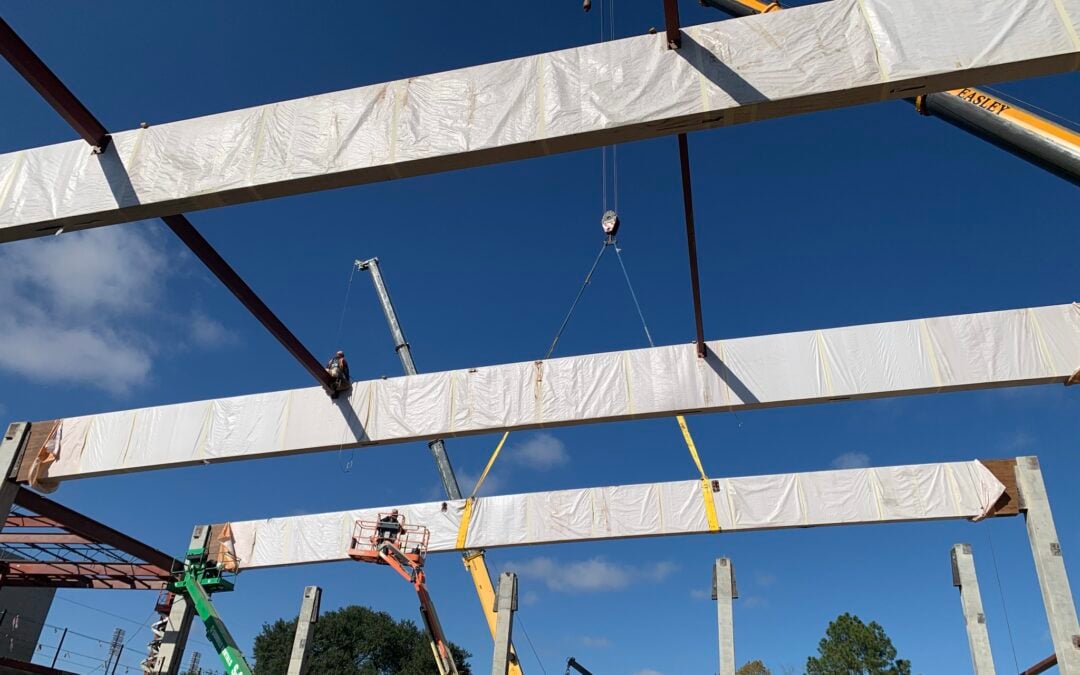
Glulam members can be substantial structural components, particularly on commercial projects with large spans or open floor plans. Their size and weight require careful planning for transportation, lifting, and placement. Installation typically involves:
- Preparing the site and confirming access
- Coordinating material deliveries
- Positioning the crane and lifting equipment
- Rigging the glulam member appropriately
- Lifting and positioning the member
- Aligning and securing connections
- Confirming placement before continuing with the next phase
General contractors and project teams should ensure that glulam beams and other mass timber components are handled and installed safely and efficiently. Proper handling and installation help maintain the quality, strength, and intended performance of the structural system.
Installing CLT Panels
Once the structural framing is ready, crews can begin installing CLT panels according to the project’s planned sequence. Each panel is lifted into position, aligned with the surrounding structure, and secured using the specified connections and fasteners. Because CLT panels can include factory-cut openings and connection locations, accurate placement is important. Installation crews also need to coordinate around:
- Stair openings
- Door and window openings
- Mechanical penetrations
- Electrical systems
- Plumbing
- Structural connections
- Adjacent CLT panels
- Glulam beams and columns
How Fabrication Affects Installation
One of the major advantages of mass timber is that components can be prefabricated before arriving at the job site. But that also means installation depends on accurate fabrication and coordination. CLT panels and glulam members are produced based on detailed project information. Their dimensions, connection locations, openings, and other details need to correspond with the conditions they will encounter during installation.
That makes communication between project teams important throughout the process. When fabrication, delivery, and installation are properly coordinated, crews can spend less time making adjustments in the field and more time installing components according to the planned sequence.
CLT and Glulam Require Different Handling Considerations
Although CLT and glulam are both timber products, their physical forms mean they require different approaches during installation. CLT panels are large, relatively flat components that require careful crane placement and alignment. Their size can also affect transportation, staging, and access around the job site.
Glulam beams and columns are typically longer, heavier structural members that require careful rigging and lifting. Some projects may include exceptionally large or long members that require detailed crane and installation planning. Understanding these differences helps installation crews plan how materials will move through the job site and how each component will be positioned.
The Importance of Installation Experience
Mass timber components are manufactured with precision, but the quality of the finished structure also depends on how those components are handled and installed. Experienced installation crews understand the practical challenges associated with:
- Large timber components
- Crane operations
- Material staging
- Connections
- Installation sequencing
- Site access
- Coordination with other trades
- Protecting materials during construction
Experienced mass timber installation crews work with general contractors and project teams to support the safe, accurate installation of CLT panels, glulam beams, and wood decking. This experience is especially valuable when CLT and glulam are installed as part of the same structural system. Understanding how these components interact helps installation teams coordinate their work with the project’s overall construction sequence and maintain accuracy throughout the process.
Why CLT and Glulam Are Often Used Together
The biggest advantage of combining CLT and glulam is that each material can perform a different role within the same structure. Glulam provides the beams and columns that create the primary structural framework, while CLT provides large structural panels for floors, walls, and roofs. Together, they can create an integrated mass timber system that combines structural performance with the visual appeal of exposed wood. Rather than choosing one material over the other, project teams can use both where their respective characteristics make the most sense.
Choosing the Right Mass Timber Installation Team
Successful mass timber construction depends on more than the materials themselves. The installation process requires careful coordination between the general contractor, design team, fabricators, suppliers, and installation crew. An experienced mass timber installer understands how CLT panels and glulam members arrive at the job site, how they need to be handled, and how they fit into the overall construction sequence. Binkley Construction works with commercial project teams to install CLT, glulam, and other mass timber systems, with an emphasis on precise installation, safe work practices, and efficient project execution.
CLT and Glulam Installation Requires Expertise and Precision
CLT and glulam serve different structural purposes, but they often work together to create a complete mass timber system. Understanding how CLT panels, glulam beams, and other timber components interact helps owners, architects, developers, and contractors make informed decisions about fabrication, delivery, staging, and installation.
As experienced mass timber installation professionals, Binkley Construction supports commercial projects that require careful coordination, precise placement, and reliable execution. From material handling and crane operations to component placement and connections, our team works alongside project partners to help ensure mass timber systems are installed safely, efficiently, and successfully.
Planning a commercial project featuring CLT, glulam, or other mass timber components? Contact us to discuss your installation needs and bring your project to life with the expertise and precision it deserves.