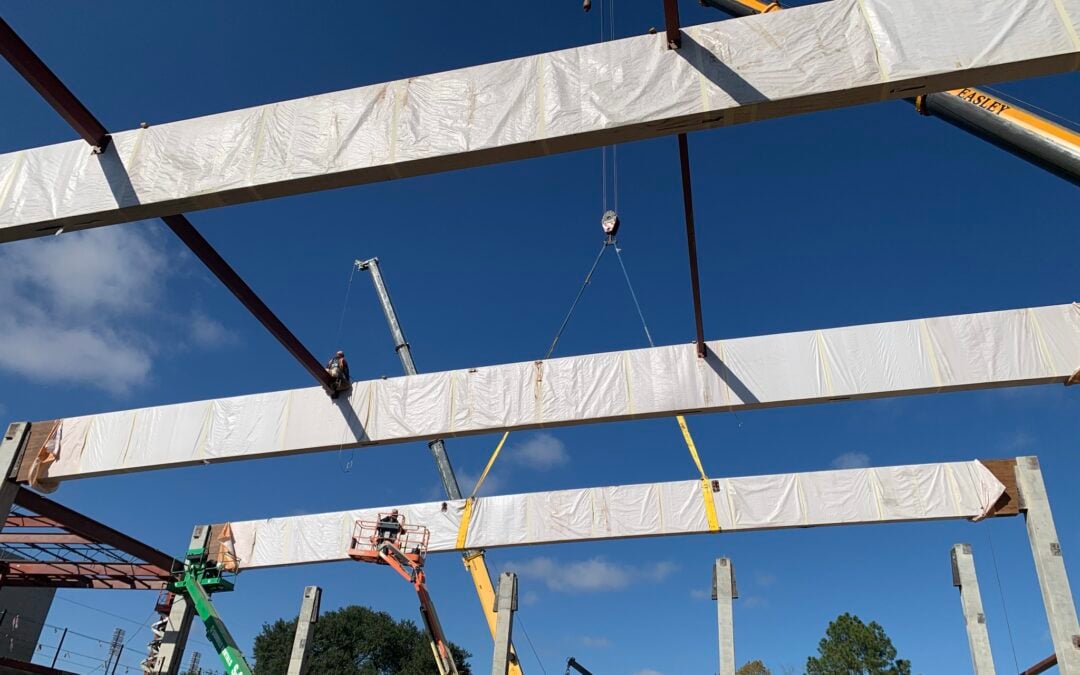
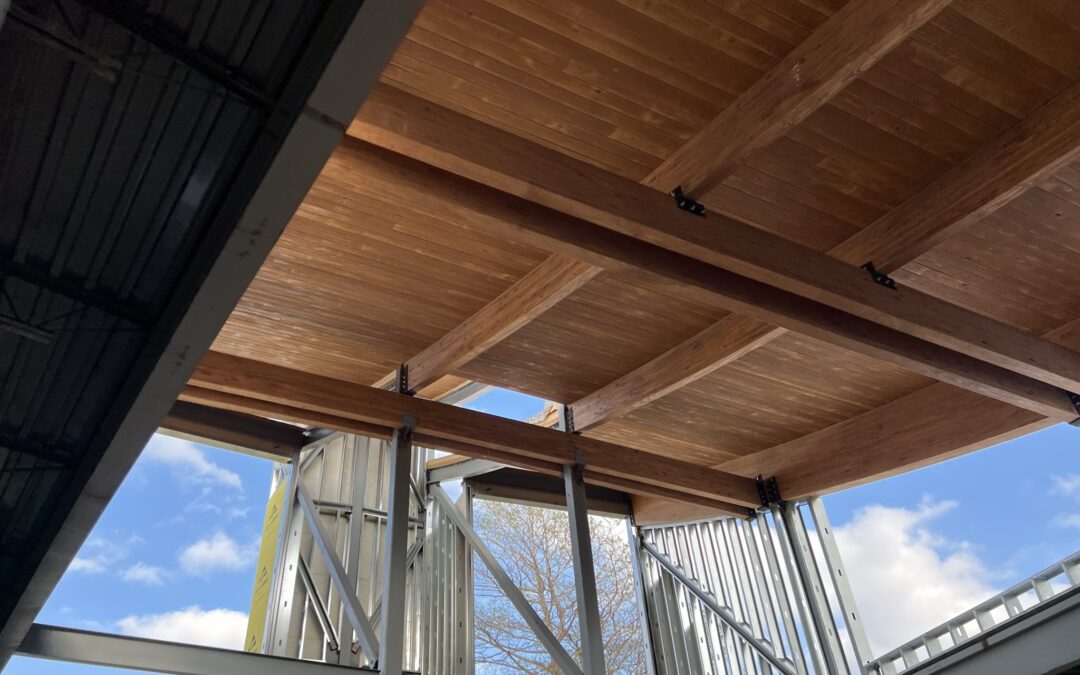
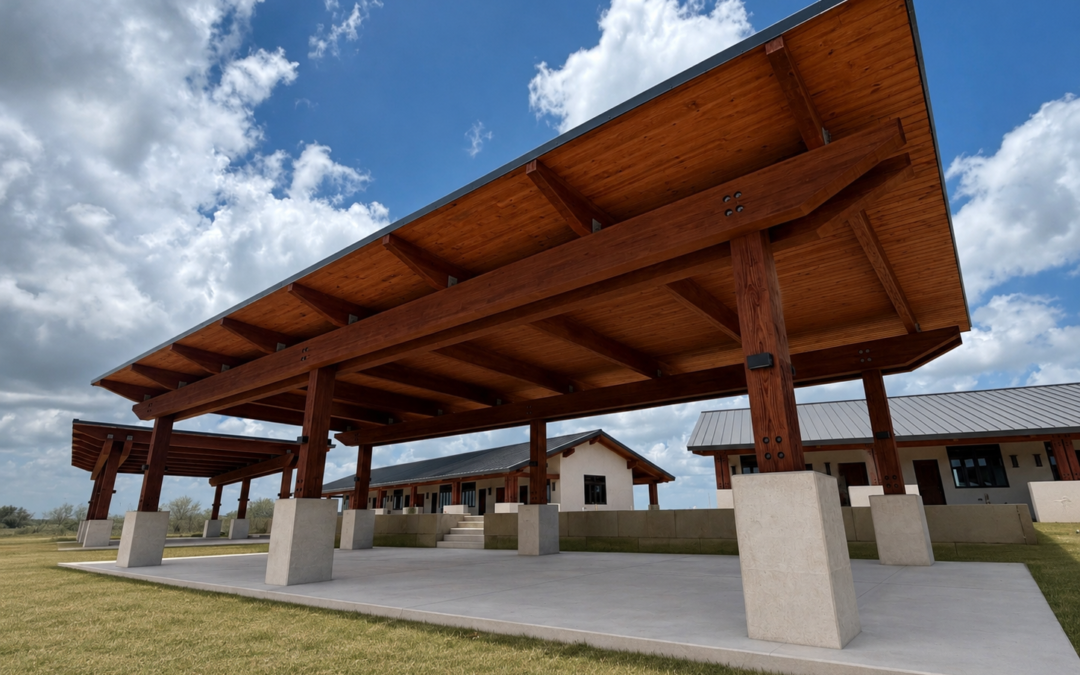
In today’s construction industry, sustainability is becoming increasingly important. Mass timber, an innovative building material, is at the forefront of this movement. It consists of large panels or beams made from layers of wood stacked together, providing strength comparable to traditional materials like steel and concrete. What sets mass timber apart is its eco-friendly nature. Unlike steel and concrete, which require significant energy to produce and contribute to carbon emissions, tall wood buildings store carbon dioxide from the atmosphere, reducing overall environmental impact.
Understanding Mass Timber Buildings
Mass timber is a modern building material made by stacking layers of wood together in different orientations, creating strong panels or beams. The most common types include Cross-laminated timber (CLT) and Glue-laminated timber (Glulam). CLT consists of several layers of lumber boards stacked at right angles and glued together, forming large structural panels. Glulam, on the other hand, is made by bonding layers of timber with strong adhesives to create beams and columns.
What Makes Mass Timber Different
Mass timber is changing how we build. Compared to concrete and steel, it’s lighter but just as strong. This means faster construction and lower transport costs. It’s also renewable, making it a more sustainable choice. Wood naturally stores carbon, reducing the impact on the environment.
Mass timber buildings also create warm, natural spaces that people enjoy. As sustainability becomes a priority in construction, mass timber is gaining attention for its eco-friendly qualities and design flexibility.
Environmental Benefits
Choosing mass timber supports climate goals while delivering comfortable, energy-efficient spaces.
- Carbon storage: Wood locks in carbon dioxide, helping lower emissions
- Low impact manufacturing: Producing timber creates fewer greenhouse gases than concrete or steel
- Energy efficiency: Timber’s natural insulation lowers heating and cooling needs
- Green certifications: Mass timber buildings often qualify for LEED and other eco-friendly standards
Economic Advantages
These advantages make mass timber a smart choice for builders and developers looking to cut costs while maintaining quality.
- Lower labor costs: Prefabricated panels save time and reduce on-site work
- Faster builds: Quick assembly means shorter project timelines
- Durability: Mass timber holds up well in different conditions, lowering maintenance costs
Market Trends and Demand
Mass timber is growing in both residential and commercial projects. Demand continues to rise, pushing innovation and changing how projects are planned and built.
- Builders prefer it for its sustainability and design appeal
- Investors see its long-term value in reducing operating costs
- Tenants enjoy healthier, natural-feeling environments
Financial Considerations
With careful planning, risks like permitting or supply challenges can be managed, making mass timber a solid long-term investment.
- Upfront costs: While prices vary, savings come from faster builds and reduced labor
- Funding options: Grants and green financing can support sustainable projects
- Return on investment: Lower utility costs, durability, and higher resale values improve profitability
Future Outlook
Looking ahead, the future of mass timber construction looks promising with ongoing technological advancements. Innovations include improved manufacturing techniques and the development of new types of mass timber products, enhancing efficiency and design possibilities.
Government policies are also increasingly supportive of mass timber. Incentives such as tax credits and grants encourage builders to choose sustainable materials, while regulations promote the use of eco-friendly building practices. These measures help drive the adoption of mass timber across the construction industry.
The potential impact of mass timber extends beyond individual projects. It could revolutionize how buildings are constructed, making urban areas greener and more sustainable. As awareness grows about climate change and environmental sustainability, mass timber is positioned to play a significant role in shaping the future of construction, offering both economic benefits and environmental advantages for communities worldwide.
Investing in a Smart Future for Construction
Investing in mass timber buildings means embracing sustainable practices with lower costs and faster construction. It offers environmental benefits like reduced carbon footprint and energy efficiency. Governments support it through incentives, and its future looks bright with advancing technology. Consider mass timber for your next project to contribute to a greener future. Engage with experts, explore available projects, and make informed decisions to capitalize on this innovative and eco-friendly building material.
Connect with us to learn more about investing in mass timber buildings.