Construction teams are increasingly turning to off-site timber construction to improve efficiency, precision, and jobsite coordination. Prefabricated glulam supports this approach by allowing engineered wood components to be manufactured to project-specific specifications before arriving on site.
According to the U.S. Forest Service, glulam timber can be stronger than steel at less than one-tenth the weight and stronger than concrete at one-sixth the weight. U.S. Forest Service – Forest Products. By moving fabrication off-site, project teams can reduce field preparation while creating a more streamlined installation process. For commercial and mass timber projects, prefabricated glulam offers a practical combination of strength, precision, design flexibility, and installation efficiency.
Key Takeaways
- Prefabricated glulam combines engineered wood with precision off-site fabrication
- Off-site fabrication can improve installation efficiency and jobsite coordination
- Glulam provides long-span structural capabilities and architectural flexibility
- Early coordination is essential for successful prefabricated timber construction
- Skilled timber erection helps turn accurately fabricated components into a finished structure
What Is Prefabricated Glulam?
Glulam, short for glue-laminated timber, is an engineered wood product made by bonding multiple layers of lumber together with structural adhesives. The resulting members can be manufactured in a variety of sizes and configurations to meet specific structural and architectural requirements.
Unlike conventional dimensional lumber, glulam can be engineered for demanding structural applications. According to APA – The Engineered Wood Association, glulam offers high strength and stiffness, long-span capabilities, dimensional stability, and design flexibility.
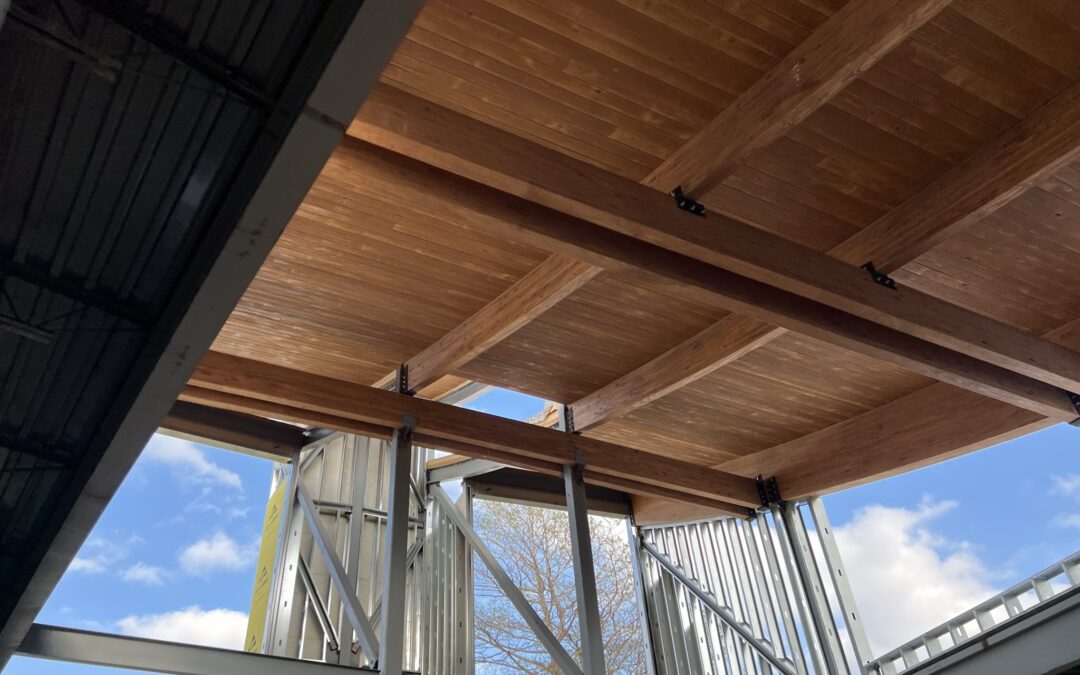
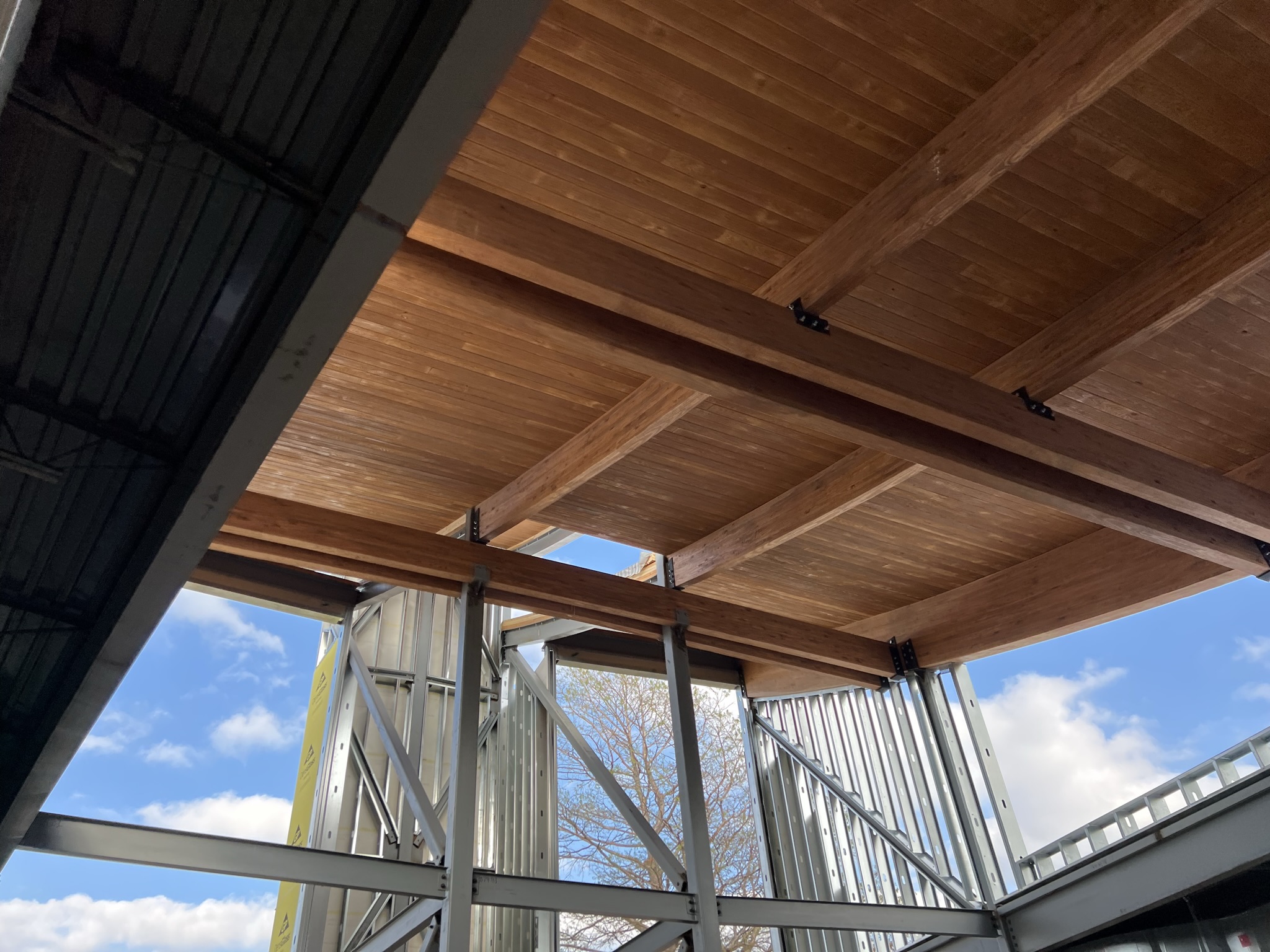
When glulam is prefabricated, manufacturing and preparation take place away from the jobsite. Components may be cut, drilled, shaped, and prepared according to project drawings before being transported to the construction site. This means the jobsite can function less like a fabrication area and more like an assembly environment.
How Off-Site Timber Construction Works
Off-site timber construction shifts portions of the building process from the jobsite to a controlled fabrication environment. The process typically begins with detailed architectural and structural drawings, followed by coordination between designers, engineers, fabricators, contractors, and other project partners.
Once dimensions, connection details, openings, and other requirements are established, timber members can be fabricated according to the coordinated design. The completed components are then transported to the site, where crews receive, stage, lift, position, and connect them as part of the building structure.
This approach requires a high level of coordination. A small change to a connection, opening, or member dimension can affect fabrication, transportation, and installation. For that reason, accurate information and early project coordination are particularly important.
Why Prefabricated Glulam Matters for Construction
Prefabrication moves complex work into a controlled environment, where glulam components can be measured, cut, drilled, and prepared before reaching the jobsite. According to APA – The Engineered Wood Association, engineered wood products can be prefabricated to precise dimensions, reducing on-site waste, labor hours, and the potential for errors. The U.S. The Forest Service also notes that glulam can be stronger than steel at less than one-tenth the weight and stronger than concrete at one-sixth the weight, demonstrating its potential as an efficient structural material. For project teams, this can create several advantages:
Greater Precision
Glulam members are manufactured according to engineered specifications. Accurate fabrication helps ensure that beams and columns correspond with the project’s structural and architectural requirements. This precision can also simplify coordination between the design, fabrication, and erection teams.
More Efficient Installation
When components arrive ready for installation, crews can focus on efficient erection. This reduces the need for extensive fabrication work in the field. It can also help streamline jobsite workflows and keep installation moving according to the planned sequence.
Better Jobsite Organization
Off-site fabrication can reduce the amount of cutting and preparation required at the construction site. This can help create a cleaner, more organized working environment. With fewer fabrication tasks on site, crews can focus more directly on installation and erection.
Design Flexibility
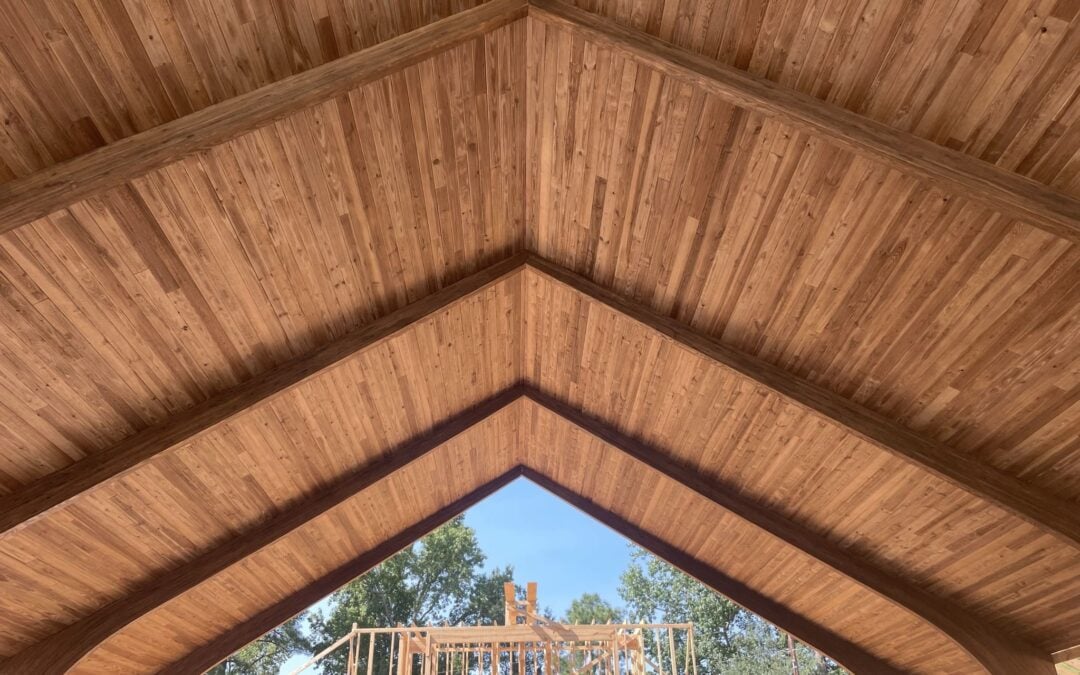
Glulam can be manufactured in straight, curved, tapered, and other configurations. This gives architects and engineers greater flexibility when developing structural and architectural concepts. Its versatility also allows timber elements to support distinctive designs while meeting specific project requirements.
Integration With Mass Timber Systems
Glulam does not have to function independently. It can work alongside other mass timber products, including cross-laminated timber (CLT), to create complete structural systems. This combination can provide both structural efficiency and greater design flexibility for commercial projects.
Prefabricated Glulam vs. Traditional Timber Construction
The difference between traditional and prefabricated timber construction is largely about where and when the work takes place. Traditional approaches may require more cutting, drilling, adjustment, and preparation at the jobsite. With prefabrication, more of this work can happen before the components arrive.
| Factor | Prefabricated Glulam | Traditional Timber Construction |
| Fabrication | Primarily completed off-site | More work completed on-site |
| Precision | Based on detailed digital and engineered specifications | More field measurement and adjustment |
| Installation | Components arrive prepared for erection | More preparation may occur during installation |
| Jobsite Waste | Potentially reduced | Can be higher when more cutting occurs on-site |
| Coordination | Requires detailed planning before fabrication | Allows more field adjustment |
| Design | Supports customized structural members | Often relies more on conventional member configurations |
The biggest advantage of prefabrication is not simply moving fabrication somewhere else. It is creating a more coordinated connection between design, manufacturing, logistics, and installation.
That connection can be particularly valuable for mass timber projects, where large structural components must arrive at the right location and in the right sequence. The U.S. Forest Service notes that mass timber structures can be prefabricated and that their lighter weight can provide transportation and construction advantages.
The Role of Digital Coordination
Successful prefabricated timber construction starts with good coordination. Before fabrication begins, everyone involved needs to be working from accurate, up-to-date project information. Key areas to coordinate include:
- Structural dimensions to ensure timber members are fabricated correctly
- Architectural requirements to maintain the intended design and appearance
- Mechanical systems to avoid conflicts with beams, columns, and panels
- Connection details so components fit together as planned
- Openings and penetrations to prevent costly field modifications
- Installation sequencing to ensure components arrive and are erected in the right order
Digital modeling can help project teams spot potential conflicts before fabrication begins. Catching an issue during coordination is much easier than discovering it after a glulam member has already been manufactured. Getting the details right before fabrication can prevent problems once the timber reaches the jobsite. Good communication between the design and construction teams also helps keep installation moving smoothly and avoid unnecessary delays.
Prefabricated Glulam and Mass Timber Construction
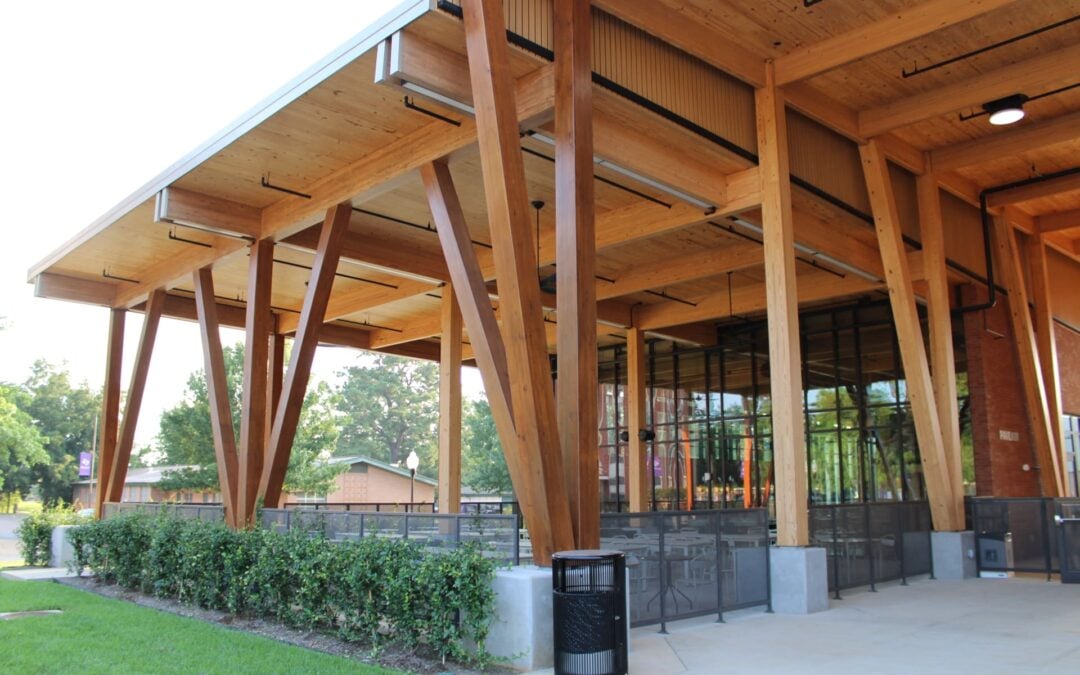
Glulam is an important component of modern mass timber construction. It can serve as beams, columns, frames, arches, and other structural elements, while CLT can be used for floors, roofs, and walls.
Together, these engineered wood products can create structural systems that combine strength, efficiency, and architectural appeal. Glulam also provides significant design flexibility. APA describes glulam as capable of supporting long spans and a wide range of structural and architectural applications. For commercial buildings, this can allow designers to create open spaces while incorporating exposed timber as part of the architectural character.
What Project Teams Should Consider
Prefabricated timber construction offers significant opportunities, but its success depends on planning. Project teams should consider several factors early in the process:
Design coordination: Structural, architectural, and building-system requirements should be coordinated before fabrication. This helps ensure that the timber design works with the rest of the building. It can also reduce the need for changes once fabrication is underway.
Connection details: Connections need to be accurately designed and understood before timber components reach the site. Clear connection details help crews know how each member should be positioned and secured. They also reduce the risk of delays caused by missing or conflicting information.
Transportation: Large glulam members require careful planning for shipping, site access, staging, and lifting. Project teams need to consider the size and weight of each member when planning delivery. A well-planned delivery schedule can also help crews avoid unnecessary storage and handling on site.
Installation sequencing: The erection sequence should be considered during planning rather than after fabrication is complete. The order in which members arrive and are installed can affect the entire workflow. Planning the sequence early helps crews work safely and efficiently.
Weather and storage: Timber components need appropriate handling, storage, and protection before installation. Keeping materials properly protected can help prevent unnecessary exposure to moisture and site damage. Proper staging also makes it easier for crews to access components when they are needed.
Qualified erection: Proper positioning, fastening, handling, and connection of engineered timber members are essential for achieving the intended structural performance. APA specifically emphasizes following manufacturer and industry instructions when installing glulam.
Why Precision Matters During Timber Erection
Prefabrication can make the installation process more efficient, but it does not eliminate the need for skilled construction professionals. Large timber members must be received, inspected, staged, lifted, positioned, and connected correctly. Erection crews also need to work closely with other trades and project partners to maintain the planned sequence.
Because prefabricated components are produced to specific dimensions, accurate installation is critical. The more precisely a project is coordinated before fabrication, the more effectively those components can be assembled on site. This is where the transition from timber fabrication to timber erection becomes particularly important. The value of prefabricated glulam is realized when precise manufacturing is matched by precise installation.
The Future of Off-Site Timber Construction
As construction teams look for ways to improve productivity and project coordination, off-site construction is becoming an increasingly practical approach. The U.S. Forest Service notes that mass timber structures can be prefabricated and that buildings made with mass timber can go up more quickly than those made with concrete and steel. For architects and developers, this approach can create opportunities to combine efficient construction with distinctive timber designs. For contractors and erection specialists, it also highlights the importance of careful planning, technical knowledge, and close coordination throughout the project.
Timber Erection Requires Expertise and Precision
Timber erection requires careful planning, accurate coordination, and skilled craftsmanship to ensure structural performance and architectural quality. Understanding how these systems are planned, delivered, lifted, connected, and installed helps owners, architects, developers, and contractors make informed decisions for commercial construction projects.
As experienced commercial construction professionals, Binkley Construction supports projects that require detailed coordination, quality workmanship, and reliable execution. From early planning through installation, our team works alongside project partners to help ensure timber systems are integrated safely, efficiently, and successfully.
Planning a commercial project featuring timber construction? Contact us to bring your vision to life with the expertise, precision, and craftsmanship your project deserves.